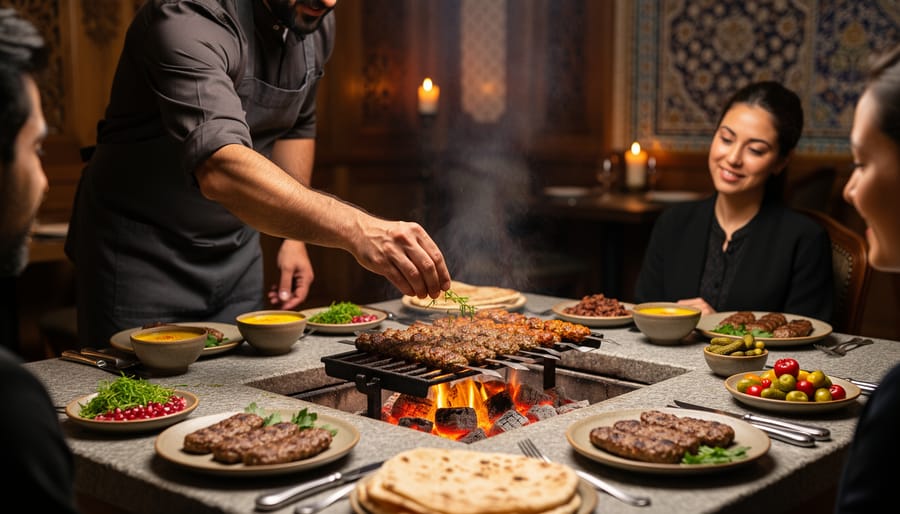
A chef’s table experience at TakhteTavoos is an intimate, multi-course evening where you sit at the center of the culinary action, watching Persian dishes take shape while the chef explains the stories, techniques, and cultural memories behind each plate. You’re not just dining; you’re stepping into a living narrative about hospitality, heritage, and the flavors that have traveled through generations of Iranian kitchens.
This isn’t the kind of chef’s table you find in hushed, minimalist spaces where technique alone takes the spotlight. At TakhteTavoos, the atmosphere carries the warmth of a Persian gathering, where food is inseparable from conversation, where the sizzle of kabab on the grill or the bloom of saffron in broth becomes part of the storytelling. You’ll taste dishes that reflect both ancestral recipes and the chef’s creative interpretations, often prepared with ingredients that connect directly to Persian culinary tradition.
What makes this experience worth the investment is the access it provides. You’re not seated in a distant corner of the dining room; you’re at the heart of the evening, asking questions, tasting as the chef seasons, and discovering why a particular spice matters or how a centuries-old method transforms a simple ingredient. It’s personal in a way that standard reservations can’t replicate.
For those curious about Persian culture beyond the familiar, a chef’s table offers depth. You leave understanding not just what you ate, but why it was prepared that way, what it meant to the people who first cooked it, and how those flavors continue to shape identity and memory.
The Essence of a Chef’s Table Experience
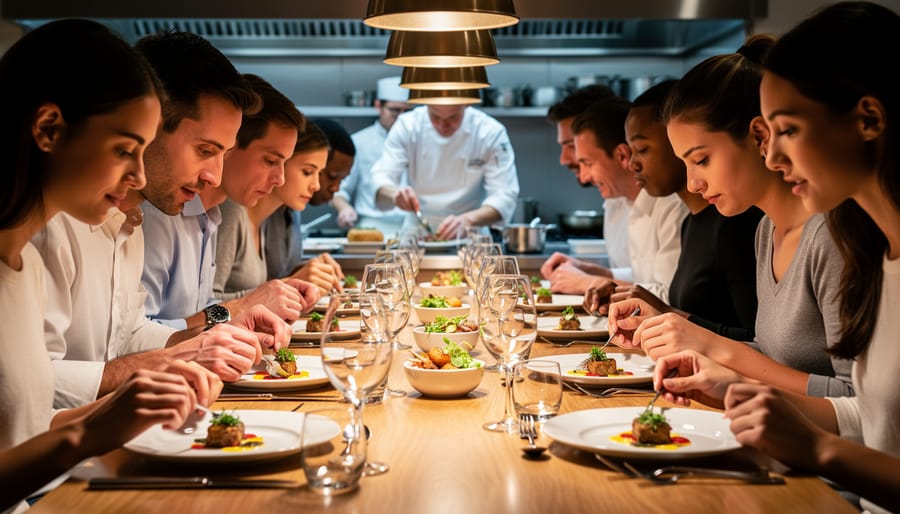
A chef’s table experience transforms dining into theater. Instead of choosing from a menu at a crowded restaurant, you sit within steps of the kitchen, sometimes at a counter overlooking the cooking line, sometimes at a private table in the prep area itself. The chef decides what you’ll eat, building a progression of dishes that tell a story only a tasting menu can tell.
The intimacy changes everything. With fewer than a dozen guests (often just two to eight), the chef can speak directly to you between courses, explaining why they paired saffron with barberries in this dish, or how their grandmother’s technique for layering rice creates that perfect tahdig crust. You watch hands move, hear the sizzle, smell each component as it’s prepared. The fourth wall between kitchen and dining room disappears.
This format demands trust. You surrender control over what arrives, when, and how much. In return, the chef crafts a journey through their perspective, regional ingredients at peak season, techniques they’ve refined over decades, flavors that matter to them personally. It’s culinary autobiography, not just hospitality.
The education happens organically. You learn why certain spices must be bloomed in oil versus dry-toasted, or how resting time affects meat texture, because you’re watching it unfold and asking questions in real time. The chef becomes your guide through not just their menu, but their philosophy and tradition. Plates arrive with context: the farm that grew these herbs, the year they discovered this combination, the cultural significance of serving this dish at celebrations.
What makes it theatrical isn’t showmanship for its own sake. It’s the rare chance to see mastery up close, to understand that great cooking is equal parts precision, intuition, and history. You leave having experienced something curated specifically for that evening, that group, that moment, impossible to replicate, even if you returned tomorrow.
How TakhteTavoos Brings Persian Soul to the Chef’s Table
The Setting: Where Heritage Meets Intimacy
Step into the TakhteTavoos dining space and you’ll notice something immediately: it doesn’t feel like a restaurant. The room holds perhaps eight guests around a single table, close enough to share glances and laughter. Underfoot, richly patterned Persian carpets soften the acoustics. Overhead, brass lanterns cast warm pools of light that move gently, never harsh or clinical. Along one wall, hand-painted ceramic tiles echo the courtyards of Shiraz and Isfahan, geometric patterns in cobalt and turquoise that catch the eye without demanding it.
The seating arrangement itself reflects Persian hospitality: everyone faces inward, toward the chef and each other, creating a circle of shared attention rather than isolated dining. You’re not watching a performance from theater seats; you’re sitting at someone’s family table, just steps from where hands are shaping dough and grinding saffron. The open kitchen forms the heart of the room, its copper pots and stone mortars visible, functional, alive. This deliberate blend, ancestral warmth meeting the transparency of modern culinary theater, sets the emotional temperature before the first course arrives.
The Menu Journey: Stories in Every Course
At TakhteTavoos, the menu doesn’t just feed you, it takes you on a geographic and temporal journey through Iran’s diverse culinary landscape. Each course is carefully sequenced to build a narrative, often beginning with lighter, herbaceous dishes from the Caspian provinces before moving through the spice-forward flavors of central Iran and culminating in the aromatic richness of southern regions.
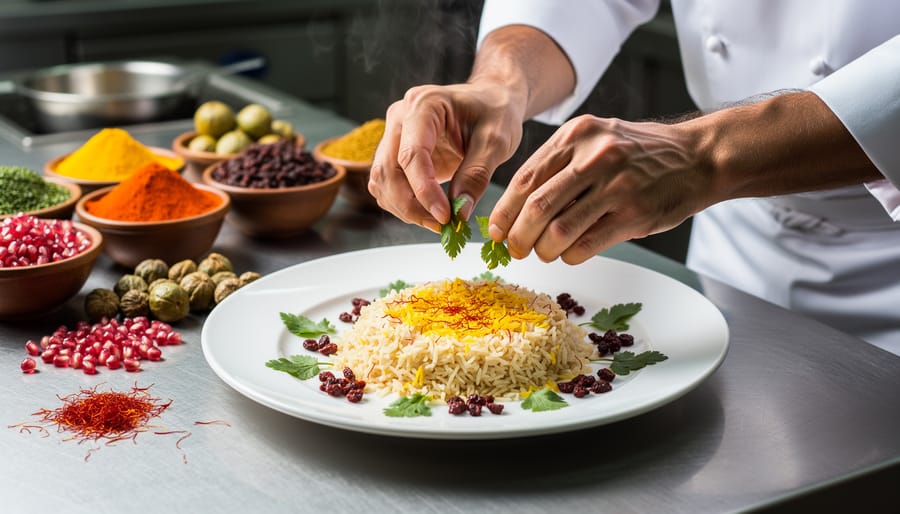
You might start with sabzi khordan, the fresh herb platter that opens every traditional Persian meal, then progress through signature Persian dishes like fesenjan reimagined with modern plating, or tahdig prepared tableside to showcase technique. Interwoven are Persian side dishes that elevate rather than merely accompany, torshi aged for months, mast-o khiar that balances heat from earlier courses.
The chef explains not just what you’re eating but why these combinations matter, how grandmother’s recipe differs from the northern version, which ingredients came via the Silk Road. Traditional preparations remain faithful, slow braises, hand-pounded spice pastes, but presentation reflects contemporary sensibilities, making centuries-old food feel both timeless and immediate.
The Human Connection: Your Chef as Cultural Guide
At TakhteTavoos, the chef doesn’t simply prepare your meal, they become your bridge to generations of Persian tradition. Between courses, you’ll hear the story behind a grandmother’s rose water technique or why a particular spice traveled the Silk Road. When the chef demonstrates how to properly layer rice for tahdig, you’re watching a skill passed down through families, not a performance. Questions aren’t just welcomed; they’re essential. Why does saffron need warm water? What makes pomegranate molasses from Shiraz different? These conversations transform strangers into dinner companions. You’re not observing Persian culture from a distance, you’re sitting at its table, learning its language through taste and story, guided by someone who carries these recipes in their memory and their hands.
What to Expect During Your TakhteTavoos Chef’s Table
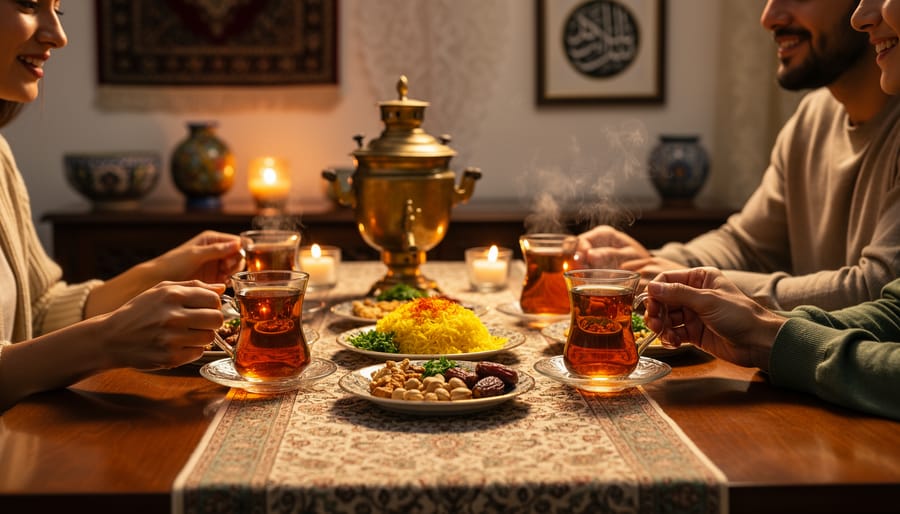
The TakhteTavoos chef’s table unfolds as a carefully choreographed evening, yet one that never feels rigid or scripted. If you’ve never experienced this format, knowing what to expect helps you relax into the experience rather than worry about protocol.
Your evening typically follows this progression:
- Arrival and welcome ritual: You’re greeted at the door, often by the chef themselves, and invited to remove your shoes if comfortable, a nod to Persian home customs. You’re offered a small glass of saffron-infused sherbet or rosewater drink as the chef introduces the evening’s theme and shows you to your seat at the intimate table.
- Introduction and menu preview: Once all guests have arrived (groups are kept deliberately small, usually six to ten people), the chef provides an overview of the culinary journey ahead. This isn’t just a menu recitation. You’ll hear where tonight’s inspiration comes from, a regional tradition, a family celebration, a seasonal harvest, and what techniques or stories you’ll encounter.
- Course progression with chef interaction: Dishes arrive in a measured rhythm, giving you time to savor without rushing. Between courses, the chef often works at a nearby station where you can watch preparations, ask questions about spices or methods, and learn the cultural context behind what you’re tasting. Expect five to seven courses, each building on the last.
- Tea and conversation closing: The meal concludes with Persian tea service and small sweets, but the conversation often continues. This is when the formal structure softens, and the evening becomes more like lingering at a friend’s table, sharing reflections on what you’ve tasted and learned.
Plan for about three hours total. The pacing feels unhurried but purposeful, never dragging. You’re not expected to have formal knowledge of Persian cuisine, just genuine curiosity. Questions are welcomed and encouraged throughout, and the chef adjusts explanations based on the group’s interest and familiarity.
Don’t worry about complex etiquette rules. Eat with the provided utensils, engage when you feel moved to speak, and allow yourself quiet appreciation when a dish deserves it. The atmosphere is warm rather than stiff. Photography is generally welcome, but you’ll find yourself so engaged in the moment that your phone stays forgotten far longer than usual.
Why This Experience Matters: More Than a Meal
When you leave a TakhteTavoos chef’s table, something shifts. You carry more than the memory of saffron-scented rice or the crack of tahdig against a spoon. You’ve participated in an act of cultural preservation that’s becoming rare in our world of standardized menus and assembly-line kitchens.
Persian cooking has always been an oral tradition, passed from grandmother to daughter through touch and taste rather than written recipes. Each dish holds stories, of migration routes along the Silk Road, of regional adaptations shaped by climate and agriculture, of family gatherings where food was the language of love. When a chef shares these stories while preparing a dish before your eyes, they’re doing what families have done for millennia: transmitting culture through the ritual of shared meals.
This matters now more than ever. As global dining becomes homogenized, as ancient recipes get diluted or forgotten, experiences like this become living archives. They keep techniques alive. They prove that authentic Iranian cuisine isn’t a museum piece but a breathing, evolving tradition.
There’s also something profoundly human happening at these tables. You’re not a customer being served; you’re a guest being honored. In Persian culture, hospitality (mehmooni) carries spiritual weight, feeding someone is an act of generosity that connects souls. When Chef Sarvi once told a guest, “My grandmother would make this for me when I was homesick,” and the guest’s eyes welled up, it wasn’t about the food. It was about recognizing our shared humanity across cultures, languages, time.
The intimacy of eight people around one table, away from phones and distractions, creates space for the conversations we’ve lost. The questions asked, the laughter shared, the collective silence when a dish arrives, these moments push back against the isolation of modern life. Food becomes what it’s always meant to be: connection.
How to Make the Most of Your Experience
The magic of a chef’s table unfolds when you arrive ready to participate, not just consume. Treat this as a conversation with your hosts, not a performance you watch passively. Ask about the ingredients, the techniques, the memories behind a dish. Persian culture views food as welcome an invitation into someone’s world, and your genuine curiosity honours that generosity.
Pace yourself carefully. The courses will arrive steadily over several hours, each designed to build on the last. Resist the urge to finish every element on the plate if you’re comfortably full; your chef would rather you savour what matters than force yourself into discomfort. Sip water between wines, engage with the stories being shared, and let the rhythm of the evening carry you rather than rushing toward the finish.
To honour the intimacy of the setting and make the most of your time:
- Arrive on time, delays disrupt the carefully timed progression of dishes
- Put your phone away except for a discreet photo or two; be present
- Ask questions when the chef pauses, but don’t interrupt mid-explanation
- Try everything offered, even unfamiliar ingredients, with an open mind
- Engage warmly with fellow diners; you’re sharing this journey together
- Mention dietary restrictions when booking, not when the course arrives
- Dress smartly casual, comfortable enough to relax, respectful of the occasion
- Don’t wear heavy perfume that might interfere with the food’s aromas
Book well ahead, especially for weekends or special occasions. When you reserve, mention celebrations or specific interests so the chef can tailor elements of the menu. Come hungry, curious, and ready to be surprised by flavours you didn’t know existed.
Common Questions About the TakhteTavoos Chef’s Table
Most guests considering their first chef’s table wonder about the practicalities before they commit. The TakhteTavoos experience typically seats six to twelve guests, creating an atmosphere intimate enough for genuine conversation yet dynamic enough to spark interesting exchanges. Plan for three to four hours, this isn’t a quick meal but a structured evening with pacing that allows each course to breathe and each story to unfold naturally.
Do I need to know Persian cuisine to enjoy this experience?
Not at all. Part of the evening’s purpose is introducing guests to Persian culinary traditions, and the chef guides you through each dish’s context and significance. Curiosity matters more than prior knowledge.
Can dietary restrictions be accommodated?
Yes, the team can work with most dietary needs if you communicate them when booking. Persian cuisine offers rich vegetarian traditions and naturally gluten-free dishes, though advance notice allows the chef to plan a cohesive menu that doesn’t feel like an afterthought.
How far in advance should I book?
Reserve at least two to three weeks ahead, longer for weekend evenings or if you’re booking for a celebration. Limited seating means popular dates fill quickly.
Is this appropriate for special occasions?
Absolutely. The intimate format works beautifully for anniversaries, milestone birthdays, or small gatherings where meaningful conversation matters. Just mention the occasion when you book.
Dress comfortably but respectfully, think smart casual rather than formal. You’ll be sitting for hours, so prioritize comfort over runway fashion. Pricing reflects the quality of ingredients, the chef’s expertise, and the exclusivity of the format; expect to invest more than a typical restaurant meal but less than destination dining. This sits in the special-occasion category, not the weekly routine. The experience differs from regular restaurant service in its pacing, interaction level, and educational depth, you’re a participant in the evening’s narrative, not simply a diner being served.
The chef’s table format strips away the usual barriers between kitchen and guest, between creator and audience. At TakhteTavoos, this intimacy becomes a bridge between cultures, a space where Persian traditions of hospitality meet the vulnerability of shared stories over carefully prepared food.
What you’ll take away isn’t just the memory of exceptional dishes, though those will linger. It’s the understanding that Persian cuisine carries generations of intention, that every spice combination and cooking method reflects geography, history, and countless family tables. You’ll leave knowing the faces and voices behind the food, having glimpsed how a culture expresses care through abundance and attention.
This isn’t theater you watch from the sidelines. It asks something of you: presence, curiosity, willingness to taste the unfamiliar and hear the personal. If you come ready to listen as much as eat, you’ll find yourself part of something that transcends dining, a living tradition that continues precisely because people gather, share, and pass it forward.
The chef’s table at TakhteTavoos doesn’t just feed you. It invites you in.