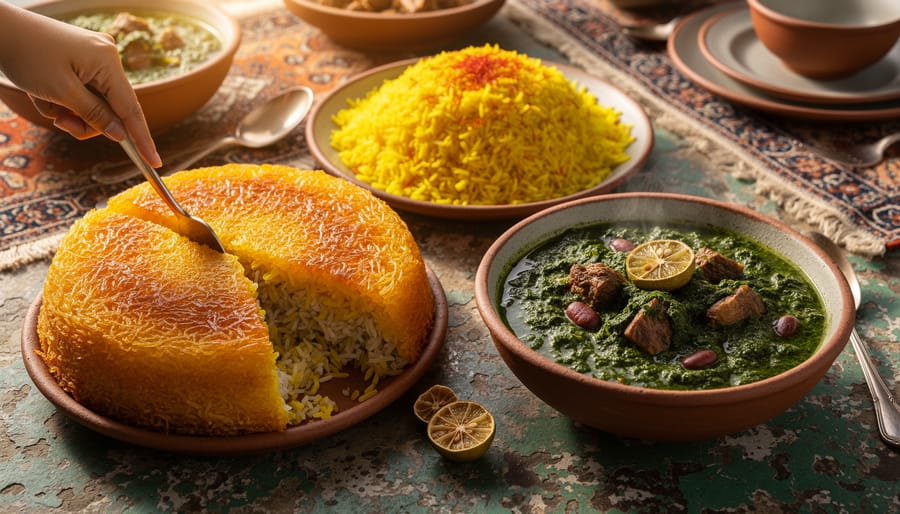
Persian cuisine reveals itself through dishes that have transcended generations, each one telling the story of Iran’s culinary soul. When my grandmother first taught me to layer saffron-scented rice with tender lamb, she wasn’t just sharing a recipe. She was passing down centuries of tradition wrapped in the aromatic embrace of tahdig’s golden crust.
What makes a dish truly signature? In Persian cooking, it’s the perfect marriage of technique, history, and flavor that creates something unmistakable. These are the dishes that Iranians crave when living abroad, the ones that fill restaurants on Friday afternoons, and the recipes families guard with fierce pride while simultaneously insisting everyone should know how to make them properly.
The signature dishes of Persian cuisine aren’t just popular menu items. They represent regional identities, seasonal celebrations, and the meticulous balance of sweet and sour, fresh herbs and dried limes, that defines Iranian cooking. A properly made ghormeh sabzi requires hours of patience as herbs slowly darken into an emerald stew. Tahchin demands the confidence to flip an entire rice cake without breaking its saffron-streaked layers.
For anyone exploring Persian restaurants in 2026 or attempting their first Persian meal at home, understanding these signature dishes opens a door to one of the world’s oldest and most sophisticated food cultures. From the jeweled rice dishes of celebrations to the comforting stews that simmer on everyday stovetops, each example offers a glimpse into what makes Persian cuisine both distinctive and deeply satisfying.
What Makes a Persian Dish a Signature?
A signature Persian dish isn’t just popular, it carries the weight of history and the warmth of countless family gatherings. These aren’t menu items chosen by marketing committees; they’re dishes that have survived centuries, crossed borders with immigrants, and spark instant recognition among Iranians worldwide.
When I think about what elevates a dish to signature status in Persian cuisine, four elements consistently appear:
- Historical roots stretching back centuries, often to ancient Persia or specific royal dynasties
- Cultural ceremonies and traditions where the dish plays a central role, from weddings to New Year celebrations
- Cooking techniques that require skill and patience, passed down through generations
- Ingredient combinations that define Persian flavor profiles, saffron with rice, pomegranate with walnut, dried lime with herbs
These signature dishes represent Persian identity in ways that transcend food. When Iranians living abroad crave home, they crave these specific dishes. When someone wants to introduce a friend to Persian cuisine, these are the examples they choose. The dishes function as cultural ambassadors, telling stories about Persian values, the importance of hospitality, the celebration of seasons, the pride in cooking excellence.
Technical complexity matters here. A signature Persian dish often demands time and attention. Creating the perfect tahdig requires understanding heat and timing. Balancing the sweet-and-sour notes in fesenjan takes experience. This complexity isn’t about making cooking difficult; it’s about honoring ingredients and techniques that have been refined over millennia.
But perhaps most importantly, these dishes create shared memories. Every Persian family has their own version, their own stories. A grandmother’s ghormeh sabzi recipe becomes a treasured heirloom. The smell of saffron rice brings back childhood celebrations. These signature examples aren’t just meals, they’re the fabric of Persian life, recognized and cherished wherever Persian culture has touched.
Iconic Rice-Based Signature Dishes
Chelo Kabab: The National Treasure
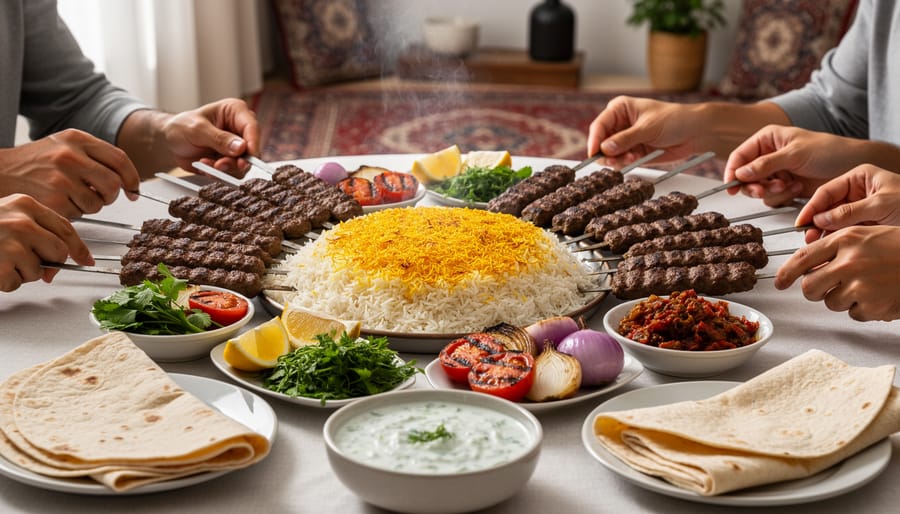
Walk into any Persian restaurant from Tehran to Los Angeles, and you’ll find chelo kabab holding court as the Iranian national dish. This isn’t just marketing. It’s a culinary truth backed by centuries of tradition and millions of family memories.
At its core, chelo kabab is deceptively simple: fluffy basmati rice steamed with butter and saffron, served alongside juicy grilled meat, usually koobideh (ground beef or lamb) or barg (marinated tenderloin). But this simplicity masks profound technique. The rice must be soaked, parboiled, and steamed to achieve separate, tender grains. The kabab requires careful seasoning and grilling over charcoal for that irreplaceable smoky char.
I remember Thursday nights at my grandmother’s house, the whole family gathered around platters piled high with saffron-stained rice and kababs fresh off the grill. She’d place a raw egg yolk and a pat of butter on top of each portion, letting us mix it into the hot rice ourselves. That golden, creamy mixture was pure comfort.
What makes chelo kabab a signature dish example isn’t complexity, it’s universality and excellence. Every Persian knows it, loves it, and has strong opinions about whose version is best. It appears at casual weeknight dinners and formal celebrations alike. When Iranians want to introduce someone to Persian food, they start here. When they’re homesick abroad, they crave this most.
The dish represents Persian hospitality at its finest: generous portions, quality ingredients, and the simple pleasure of sharing a meal that’s been perfected over generations. It’s not fancy, but it’s iconic.
Tahdig: The Golden Crown
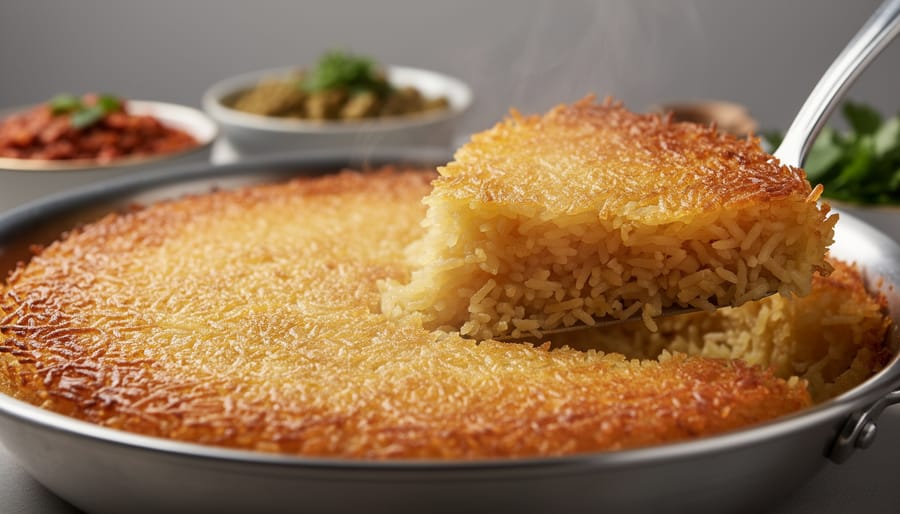
Tahdig isn’t just a signature dish example, it’s the crown jewel every Persian cook strives to perfect. This crispy, golden layer of rice forms at the bottom of the pot during cooking, and when you flip it onto a platter, it reveals a caramelized crust that shatters beautifully with each bite. The contrast between the crunchy exterior and fluffy rice creates a texture experience you won’t find in other cuisines.
I grew up watching my grandmother’s face light up when she achieved the perfect tahdig, that satisfying moment when the entire crust released from the pot in one golden piece. In Persian households, there’s an unspoken competition among cooks, and the quality of your tahdig speaks volumes about your skill in the kitchen.
What makes tahdig such a defining signature example of Persian cuisine is its universal appeal at every gathering. Whether it’s a simple weeknight dinner or an elaborate wedding feast, the tahdig disappears first. Guests fight politely over the crispy pieces, and children hover near the kitchen waiting for warm fragments straight from the pot.
The techniques vary across families, some add yogurt for extra crunch, others prefer thin potato slices or lavash bread as the base. But regardless of the method, tahdig represents Persian hospitality and the pride we take in transforming simple ingredients into something extraordinary through patience and technique.
Zereshk Polo: The Celebration Centerpiece
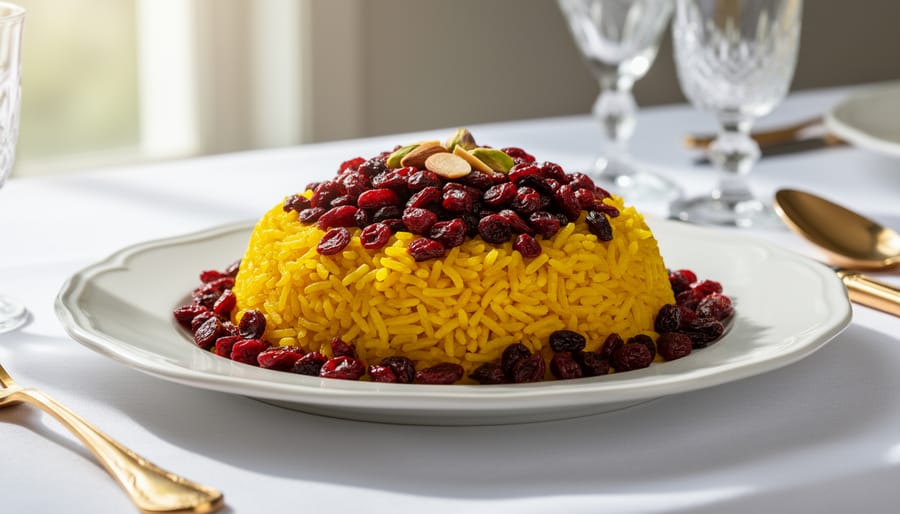
Walking into a Persian wedding, you’ll see a table that sparkles like treasure, mounds of saffron rice crowned with ruby-red barberries and slivers of orange peel, their colors so vibrant they seem to glow under the lights. This is zereshk polo, and among signature dish examples in Persian cuisine, few carry the same celebratory weight or visual drama.
The dish earns its jeweled nickname honestly. Tiny barberries, tart and bright, are sautéed with sugar until they glisten, then scattered across rice colored golden with saffron. Slivered pistachios and almonds add texture and elegance. The result is a dish that tastes of celebration itself, the sweetness of the barberries balancing the perfumed rice, each bite a small burst of flavor.
Persians choose zereshk polo for weddings and special gatherings because it represents abundance and joy. The ingredients aren’t everyday staples; saffron costs more than gold by weight, and good barberries require careful sourcing. Serving this dish says something about the occasion and the hosts’ generosity. I remember my cousin’s wedding, where the zereshk polo arrived on silver platters, the barberries arranged in elaborate patterns. Guests took photos before touching their plates.
Traditionally, the dish is paired with roasted chicken, its crispy skin golden from a saffron and butter glaze. The combination became a signature choice for Persian celebrations because it feeds crowds beautifully and photographs like a dream. Home cooks practice the barberry arrangement like an art form, knowing that presentation matters as much as taste when the occasion calls for your best.
Signature Stew Examples (Khoresh)
Ghormeh Sabzi: The Herb Masterpiece
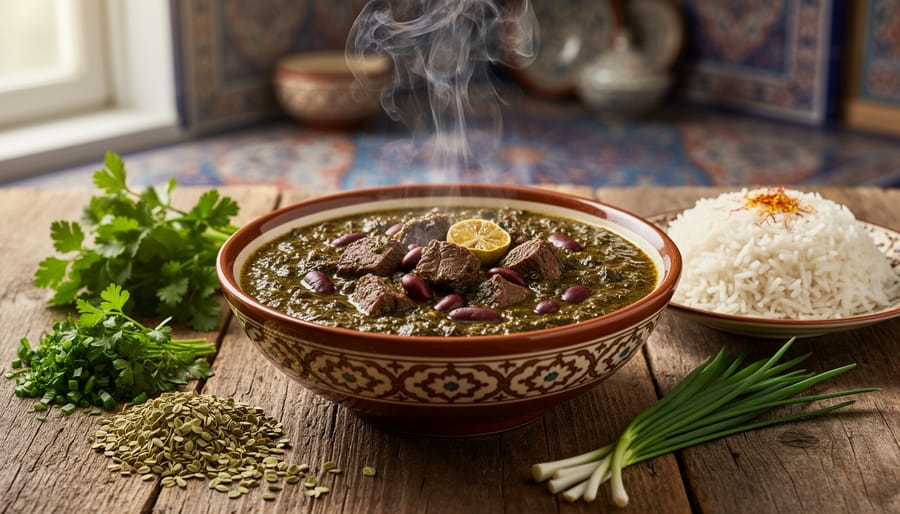
Walk into any Persian home on a weekend afternoon, and you’ll likely encounter the unmistakable scent of fresh herbs simmering with kidney beans, the telltale sign that someone’s making ghormeh sabzi. This stew stands as perhaps the most beloved signature dish example in all of Persian cooking, a green masterpiece that Iranians worldwide consider the ultimate comfort food.
The dish combines parsley, cilantro, fenugreek leaves, and sometimes spinach with red kidney beans and tender chunks of lamb or beef. Dried limes (limoo amani) add a distinctive sour note that defines the flavor profile. What makes ghormeh sabzi particularly special is the painstaking process of washing, drying, and finely chopping pounds of fresh herbs, a labor of love that fills kitchens with an intoxicating aroma for hours.
Every Iranian family claims their recipe is the correct one. Some insist on including leeks or scallions. Others debate whether the kidney beans should be whole or slightly mashed. My grandmother would only use lamb shoulder, while my aunt swears by beef shank. These passionate discussions about technique and ingredients speak to how deeply personal this dish becomes to those who grew up with it.
The stew’s deep green color comes from cooking the herbs low and slow until they darken and release their essential oils. Serve it over steaming basmati rice with Persian side dishes like mast-o-khiar (yogurt and cucumber) to balance the richness, and you’ve got a meal that represents everything Persian cuisine offers: complex layering of flavors, respect for fresh ingredients, and the patience required to create something truly extraordinary.
Fesenjan: The Ancient Royal Dish
Fesenjan stands as perhaps the most regal signature dish example in Persian cuisine, with roots stretching back over two thousand years to the Sassanid Empire. This mahogany-colored stew combines ground walnuts and pomegranate molasses with chicken or duck, creating a sauce so rich and complex that food historians consider it a window into ancient Persian court dining.
The first time I watched my grandmother make fesenjan, she told me it was the dish Persian queens served at royal banquets. Whether entirely true or family lore, the sentiment captures something real about this signature dish, it tastes like luxury. The preparation demands patience and skill. You must toast the walnuts until they release their oils, then grind them fine enough to create a velvety sauce. The pomegranate molasses gets balanced with sugar, creating that hallmark sweet-and-sour profile that defines Persian cooking at its most sophisticated.
What makes fesenjan a signature dish example is precisely this complexity. Unlike simpler stews, it requires balancing multiple flavor dimensions: the bitter depth of walnuts, the tart brightness of pomegranate, a whisper of sweetness, and the savory foundation of slow-cooked meat. Get it right, and each spoonful tells the story of Persian culinary mastery.
Traditionally served over plain white rice, fesenjan appears at special occasions and formal dinners rather than weeknight meals. Some families prepare it for Yalda Night, the winter solstice celebration where pomegranates symbolize the sun’s rebirth. Others save it for honored guests. You’ll find it on menus at upscale Persian restaurants, often accompanied by warnings about its richness, this is not a dish you eat quickly or lightly, but one you savor like the edible history it represents.
Gheymeh: The Comfort Classic
When a Persian mother asks what you’d like for dinner and you say “Gheymeh,” you’re asking for more than just food, you’re asking for a warm embrace in a bowl. This signature dish example holds a special place in Iranian hearts as the stew that fixes everything, from a bad day at work to a rainy afternoon that calls for something familiar.
Gheymeh combines yellow split peas with tender chunks of meat in a golden tomato-based sauce, fragrant with turmeric and dried lime. The magic happens in the final touch: crispy, shoestring-cut potatoes piled on top, creating a textural contrast that turns this humble stew into something memorable. Every Persian household has their version, some add a pinch of cinnamon, others swear by extra dried lime for that distinctive tangy note.
What makes Gheymeh a signature dish example isn’t complexity or rare ingredients. It’s the reliability, the way it appears at family lunches on Fridays, the simplicity that somehow delivers profound satisfaction. I’ve watched my grandmother prepare it countless times, and she’d always say the same thing: “The longer it simmers, the better it gets”, advice that applies to both the stew and life itself.
Other Essential Signature Dish Examples
Ash Reshteh: The Noodle Soup Tradition
Ash Reshteh stands as a signature dish example that embodies Persian hospitality at its most generous. This thick, soul-warming noodle soup, loaded with fresh herbs, beans, chickpeas, and reshteh (flat noodles), appears on tables during Nowruz, the Persian New Year, symbolizing good fortune and new beginnings. The dish represents everything welcoming about Persian culture: it’s meant to be shared, ladled generously into bowls, and topped with kashk (fermented whey), fried onions, and mint oil.
My grandmother always made massive pots of Ash Reshteh before spring celebrations, and neighbors would inevitably appear at the door, drawn by the aroma of sautéed herbs. She’d insist they take a bowl home, because this signature soup is fundamentally about abundance and community. While it shares the appetizer table with popular mezze sides Ash Reshteh often serves as a complete meal itself, substantial enough to satisfy yet light enough to make you reach for seconds. The layering of flavors, earthy legumes, bright herbs, tangy kashk, creates complexity that improves overnight, making it a signature example of Persian slow-cooked wisdom.
Joojeh Kabab: The Saffron Chicken
When the scent of saffron-marinated chicken hits the grill, you know Joojeh Kabab is about to steal the show. This signature dish example showcases Persian cuisine at its most accessible, tender chunks of chicken breast soaked overnight in yogurt, lemon juice, onion, and precious saffron threads, then grilled to golden perfection over charcoal.
I’ve watched countless diners order Joojeh Kabab as their introduction to Persian food, drawn by its familiar appeal yet captivated by the exotic fragrance of saffron. The marinade does more than flavor, it transforms the chicken into something impossibly moist, with a slight char on the edges and a bright, tangy interior that makes each bite memorable.
At family gatherings, Joojeh Kabab often appears alongside heavier red-meat kababs, offering a lighter option that everyone from children to grandparents enjoys. Persian restaurants place it prominently on their menus because it represents the essence of Persian grilling traditions without intimidating newcomers.
The accompaniments matter: fluffy white rice, grilled tomatoes that burst with smoky sweetness, and a wedge of fresh lime. Together, they create a signature dish example that bridges tradition and modern tastes, making it equally at home at a Tehran backyard party or a suburban Persian restaurant.
Kashke Bademjan: The Eggplant Ambassador
Kashke Bademjan stands as one of Persian cuisine’s most beloved signature appetizers, showcasing eggplant transformed into something extraordinary. This dish layers smoky fried eggplant with kashk (fermented whey), creating a creamy, tangy example of Persian mezze artistry. The combination sounds simple until you taste how the garlic-infused eggplant melds with the distinctive sourness of kashk, topped with caramelized onions and a drizzle of mint oil.
I remember watching my aunt fry eggplant slices until they turned golden and silky, then mash them with practiced patience. The kashk she drizzled on top had that unique funky-sour flavor that Iranians crave but newcomers sometimes find surprising. It’s an acquired taste that becomes addictive. Persian restaurants typically serve this signature dish warm with fresh bread for scooping, and it’s the appetizer that often converts skeptics into Persian food enthusiasts. The contrast of textures and the depth of flavor make it an ideal signature dish example of how Persian cuisine elevates humble vegetables into something memorable.
Experiencing Signature Persian Dishes in 2026
Finding authentic signature Persian dishes has become easier than ever in 2026, whether you’re dining out, ordering in, or exploring these examples in your own kitchen. Persian restaurants remain the most reliable source for experiencing dishes like ghormeh sabzi, fesenjan, and chelo kabab prepared by cooks who’ve inherited techniques spanning generations. When searching for a restaurant, look beyond the menu photos, check if they mention specific details like hand-picked herbs, overnight marination processes, or house-made kashk, which signal a commitment to authenticity rather than shortcuts.
Delivery has expanded options considerably, though some signature dishes travel better than others. Rice dishes like zereshk polo maintain their texture remarkably well if the restaurant packages the tahdig separately, while stews actually improve during the journey as flavors deepen. Request that sauces and rice be kept separate if possible, and reheat gently to preserve the layered aromatics that define these dishes.
Home cooking offers the most rewarding path for many enthusiasts in 2026, with Persian cooking classes, video tutorials, and ingredient delivery services making signature dishes accessible. Start with simpler examples like joojeh kabab or kashke bademjan before tackling the intricate herb work of ghormeh sabzi. Persian grocery stores, both physical and online, now stock essentials like dried limes, barberries, and quality saffron year-round, removing barriers that once made these signature dishes feel out of reach for home cooks outside Iran.
These signature dish examples offer more than just a menu of what to order at a Persian restaurant. They represent centuries of culinary wisdom, the warmth of Persian hospitality, and the pride of a culture that has always honored the ritual of sharing food. Each dish carries stories of family gatherings, celebration traditions, and the careful hands that have passed down recipes through generations.
Whether you’re planning your first visit to a Persian restaurant or feeling inspired to recreate these flavors in your own kitchen, approaching these dishes as a cultural journey rather than just a meal will deepen your appreciation. Don’t hesitate to ask questions, request recommendations, or order several dishes family-style to experience how different flavors complete the table in Persian dining tradition.
The beauty of Persian cuisine lies in its ability to turn every meal into an act of generosity and connection. These signature dish examples are your invitation to experience that warmth firsthand.