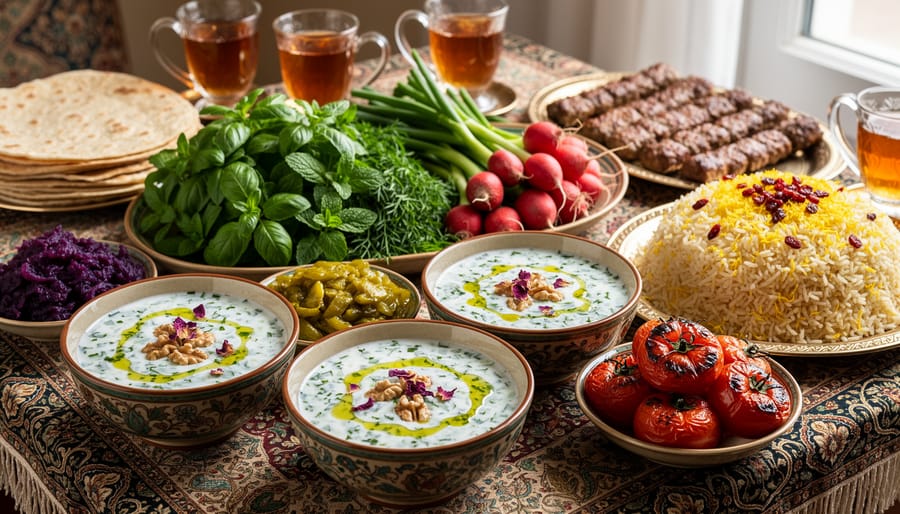
Picture a table laden with jewel-toned dishes: glistening saffron rice studded with barberries, creamy yogurt swirled with cucumber and herbs, smoldering grilled tomatoes still blistering from the flame. In Persian cuisine, side dishes aren’t mere afterthoughts—they’re essential players in a carefully orchestrated symphony of flavors, textures, and colors that transform every meal into a celebration.
Persian side dishes, known collectively as mokhalafat, represent centuries of culinary wisdom passed down through generations of home cooks and master chefs. These accompaniments do far more than fill space on the plate; they balance rich stews, complement smoky kebabs, cleanse the palate between bites, and add nutritional variety to every meal. From the tangy bite of torshi pickles to the refreshing crunch of sabzi khordan herb platters, each side dish serves a specific purpose in the Persian dining experience.
What makes these dishes particularly fascinating is their versatility and approachability. Many require just a handful of ingredients and simple preparation methods, yet deliver restaurant-quality results that can elevate even the most basic main course. They reflect the Persian philosophy of balance—the interplay of hot and cold, rich and light, cooked and raw—that has guided this ancient cuisine for millennia.
Whether you’re planning to recreate an authentic Persian feast at home, wondering what to order at your local Persian restaurant, or simply curious about expanding your culinary repertoire, understanding these essential side dishes opens the door to a richer, more complete appreciation of Persian gastronomy. Each dish tells a story of Persian hospitality, where abundance and variety demonstrate love and respect for guests.
Why Side Dishes Matter in Persian Cuisine
In Persian culture, the table is never truly complete without an array of vibrant side dishes adorning every available space. These aren’t merely afterthoughts or simple accompaniments—they’re essential players in the symphony of flavors that defines authentic Persian dining. When you sit down to a traditional Persian meal, you’ll notice that the main course, while important, shares the stage equally with its supporting cast of colorful, aromatic sides.
Walk into any Persian home during mealtime, and you’ll witness what generations have perfected: the art of balance. My grandmother used to say that a proper Persian table should offer something for every sense and every mood. The tangy bite of torshi (pickled vegetables) cuts through the richness of buttery rice. Fresh herbs provide a cooling contrast to warmly spiced kebabs. Creamy mast-o-khiar (yogurt and cucumber) soothes the palate between bites of savory stews.
There’s an old Persian saying: “A table without side dishes is like a garden without flowers”—beautiful perhaps, but missing its true essence.
This philosophy reflects the deep-rooted tradition of Persian hospitality, where abundance and variety demonstrate genuine care for guests. Setting out multiple side dishes isn’t about showing off—it’s about ensuring everyone at the table finds something that speaks to their taste, creating a personalized dining experience within the communal meal.
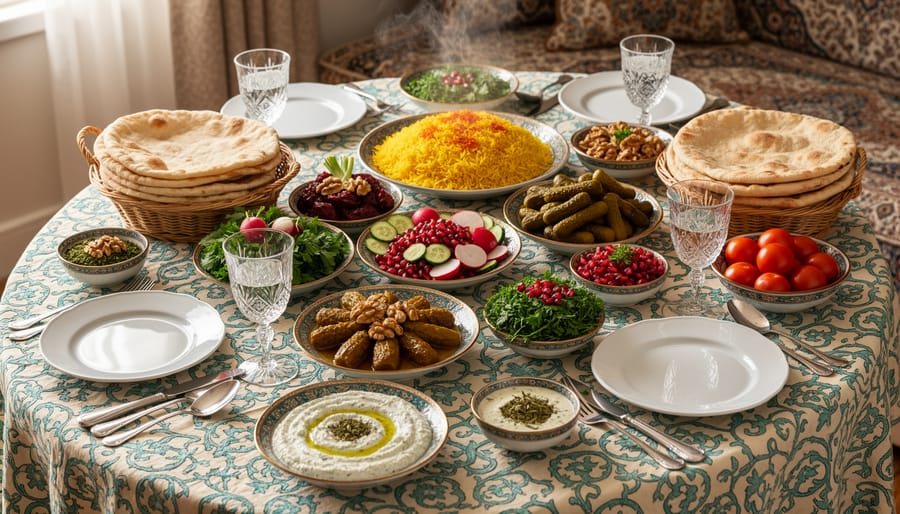
The traditional Persian sofreh (tablecloth spread) tells this story beautifully. Laid out on the floor or table, it becomes a canvas painted with small bowls of sabzi khordan (fresh herbs), plates of panir-o-gerdoo (cheese and walnuts), dishes of olives, and various torshi. Each element serves a purpose: cleansing the palate, adding textural interest, providing nutritional balance, and creating visual appeal.
These side dishes also serve a practical purpose in Persian dining. They allow diners to customize each bite, adjusting flavors and textures to their preference, making every meal an interactive, engaging experience that celebrates both individual choice and communal sharing.
The Essential Persian Side Dishes You Need to Know
Sabzi Khordan (Fresh Herb Platter)
If there’s one side dish that appears at every Persian table without fail, it’s sabzi khordan. I’ll never forget my first experience with this seemingly simple platter at my Iranian friend’s family gathering. Her grandmother kept urging me to nibble on the fresh herbs between bites of rice and stew, insisting it would help my digestion. She was absolutely right, and I’ve been hooked ever since.
Sabzi khordan, which literally translates to “herb eating,” serves a beautiful dual purpose in Persian dining. Beyond adding freshness and crunch to the meal, these raw herbs act as natural palate cleansers, cutting through the richness of stews and rice dishes while aiding digestion. It’s the Persian equivalent of a salad, but somehow more vibrant and alive.
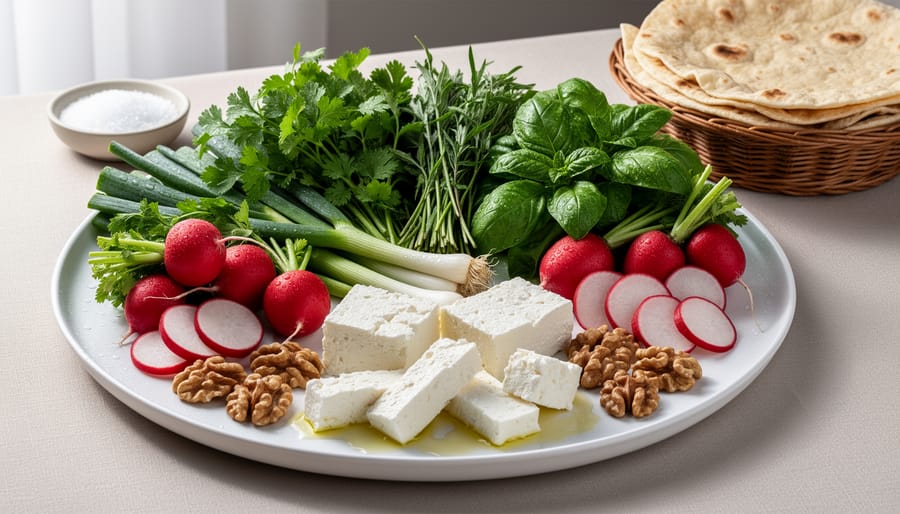
The traditional sabzi khordan platter typically includes:
- Fresh basil (rayhan), both the sweet and holy varieties
- Mint (na’na) for its cooling, refreshing quality
- Tarragon (tarkhun) adding a subtle anise note
- Cilantro and flat-leaf parsley for earthiness
- Radishes providing peppery crunch
- Scallions or green onions for sharpness
- Walnuts offering buttery richness
- Feta cheese (panir) for salty creaminess
The beauty of this platter lies in its simplicity and customization. Each diner creates their own perfect bite, perhaps wrapping a sprig of mint and a piece of feta in lavash bread, or alternating between herb nibbles and forkfuls of stew. There’s no wrong way to enjoy it.
What makes sabzi khordan truly special is how it transforms any meal into a communal, interactive experience, encouraging diners to slow down and savor each element.
Torshi (Persian Pickles)
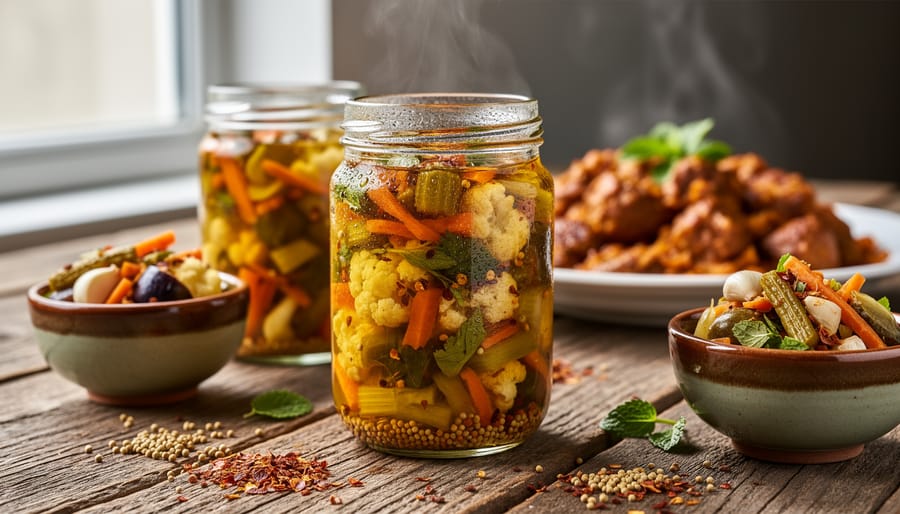
Walk into any Persian kitchen, and you’ll likely spot rows of glass jars lining shelves or windowsills, each filled with jewel-toned vegetables suspended in tangy brine. These are torshi, Persian pickles that have been gracing tables for centuries, adding a sharp, acidic punch that cuts through rich stews and balances the buttery warmth of rice dishes.
The variety is stunning. Torshi-e liteh combines eggplant, cauliflower, carrots, and herbs in a vinegar-based brine that’s both tart and slightly sweet. Torshi-e makhloot, meaning mixed pickle, features an even broader vegetable medley that might include everything from cabbage to green beans, garlic to fresh herbs, all swimming in a spiced vinegar solution. Then there’s torshi-e seer, whole garlic cloves aged until mellow and sweet, and torshi-e bademjan, featuring tender eggplant.
What makes these pickles special isn’t just their complex, mouth-puckering flavor. Like other fermented foods strengthen gut microbiome, torshi offers genuine digestive benefits, which is why Persians traditionally serve them alongside heavy meals. The acidity aids digestion while probiotics support gut health.
Aging is an art form passed down through generations. My grandmother would prepare massive batches each fall, carefully monitoring her jars for weeks or months before declaring them ready. Some families age torshi for years, believing patience deepens the flavor and increases medicinal properties. The longer they sit, the more the vegetables soften and the brine mellows into something extraordinary.
At the table, torshi serves as both condiment and palate cleanser, a small spoonful transforming each bite of your meal into something brighter and more complete.
Mast-o Khiar (Yogurt and Cucumber)
Walk into any Persian home on a summer afternoon, and you’ll likely find a bowl of Mast-o Khiar chilling in the refrigerator, ready to cool you down and complement the evening meal. This refreshing yogurt and cucumber side dish holds a special place in Persian dining, acting as both a palate cleanser and a flavor enhancer alongside heavier dishes.
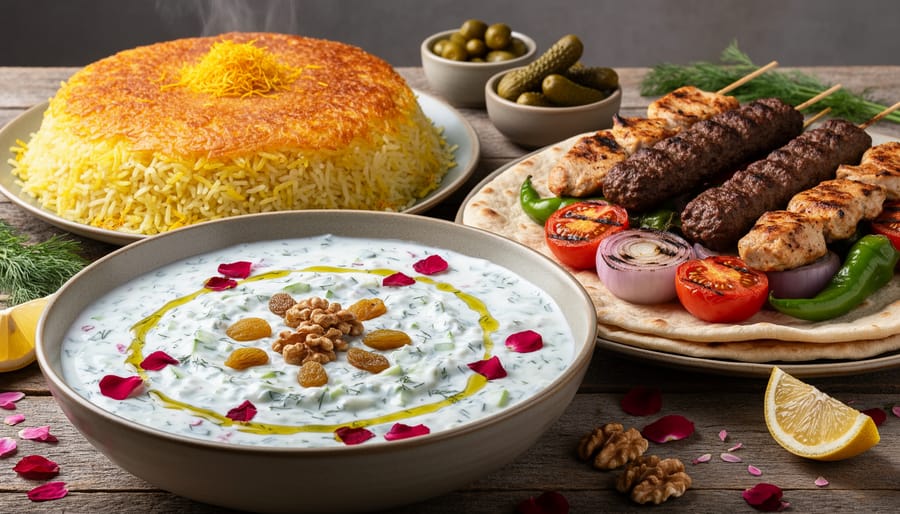
The beauty of Mast-o Khiar lies in its elegant simplicity. Thick, creamy yogurt forms the base, mixed with finely diced cucumbers, dried mint, and sometimes rose petals or crushed walnuts for added texture. Some families add raisins for a subtle sweetness, while others keep it purely savory with garlic and a sprinkle of salt. Each household has its cherished recipe, passed down through generations.
Yogurt isn’t just a cooking ingredient in Persian cuisine; it’s practically a food group of its own. Beyond yogurt’s nutritional benefits, Persians have long understood its digestive properties and cooling effects, making it essential for balancing spice-forward dishes and rich, buttery rice.
Mast-o Khiar truly shines when served alongside saffron-infused rice and smoky kebabs. The cool, tangy yogurt cuts through the richness of grilled meats and provides a refreshing contrast to warm rice dishes. It’s equally delightful scooped up with fresh flatbread or enjoyed as a light accompaniment to herb-heavy stews. This versatile side dish transforms an ordinary meal into a balanced, authentic Persian dining experience.
Salad Shirazi
Sometimes the most extraordinary things come in the simplest packages. Salad Shirazi is the perfect example of this truth in Persian cuisine—a humble combination of diced cucumbers, tomatoes, and onions dressed with fresh lime juice and a drizzle of olive oil. Named after the beautiful city of Shiraz in southern Iran, this refreshing salad has graced Persian tables for generations, offering a cooling counterpoint to smoky grilled meats and aromatic rice dishes.
What makes Salad Shirazi so universally beloved is its bright, clean flavor profile. The vegetables are cut into small, uniform cubes—a detail that matters more than you might think. This precise dice allows each bite to capture all three vegetables together, creating a perfect harmony of flavors and textures. The cucumbers provide cool crunch, the tomatoes add juicy sweetness, and the onions contribute a sharp bite that mellows beautifully in the citrus dressing.
I’ve watched countless first-timers at Persian restaurants light up when they taste this salad. There’s something deeply satisfying about its freshness, especially when paired with rich kebabs or buttery tahdig. The lime juice and dried mint that often garnish the top cut through heavier dishes like a palate cleanser, making each bite of your meal feel as vibrant as the first.
During hot summer months in Iran, Salad Shirazi becomes even more essential. It’s light enough not to weigh you down, yet substantial enough to feel like a meaningful part of the meal. Best of all, it takes minutes to prepare but delivers maximum flavor impact.
Mast-o Moosir (Yogurt with Shallots)
Among all Persian yogurt preparations, Mast-o Moosir holds a special place for its bold, distinctive character. This isn’t your everyday yogurt dip – it’s a conversation starter that divides dinner tables into devoted fans and curious skeptics, though most eventually join the former camp.
The star ingredient, moosir, is a type of Persian shallot with an intensely pungent, garlicky flavor that’s beautifully tempered when combined with thick, creamy yogurt. When my grandmother prepared this dish, she’d always warn first-time guests about its assertive personality, watching with amusement as their expressions transformed from hesitation to pleasant surprise after the first bite.
Traditional preparation involves finely chopping or grating dried moosir bulbs, then mixing them thoroughly with strained yogurt, adding just a pinch of salt. The result is a pale, aromatic side dish with a complex flavor that’s simultaneously sharp, tangy, and cooling – a fascinating contrast that perfectly complements rich, grilled meats.
You’ll most commonly find Mast-o Moosir served alongside kabobs, particularly lamb and beef varieties, where its assertive flavor cuts through the smokiness and fat of the grilled meat. It’s also a popular companion to hearty rice dishes like tahchin, providing a refreshing counterpoint to the dish’s crispy, golden crust.
Fair warning: the flavor lingers memorably, so it’s best enjoyed when everyone at the table partakes. But that’s part of its charm – Mast-o Moosir brings people together, even if just in shared aromatic unity.
Other Notable Sides
Beyond the well-known classics, the Persian table offers an array of delightful sides that reflect regional specialties and seasonal abundance. Zeytoon parvardeh, a northern Iranian delicacy from the Gilan region, transforms ordinary olives into something extraordinary. These green olives are crushed and marinated with pomegranate molasses, crushed walnuts, and fresh herbs, creating a tangy-sweet condiment that perfectly balances rich meat dishes. My grandmother would prepare large jars of zeytoon parvardeh each autumn, the fragrant mixture aging beautifully in her pantry.
The yogurt-based mast family extends far beyond the familiar cucumber variety. Mast-o-khiar’s cousins include mast-o-moosir, a pungent creation featuring wild shallots that adds a bold, garlicky punch to the table. There’s also mast-o-esfenaj, where spinach mingles with thick yogurt and garlic, offering an unexpectedly satisfying green side that works beautifully alongside grilled meats.
Persian dining embraces seasonality with grace. Spring brings fresh herbs and young garlic, summer offers an abundance of tomatoes and cucumbers for simple salads, autumn introduces jewel-toned pomegranates, and winter features pickled vegetables that brighten the colder months. These rotating sides ensure that no two Persian meals feel quite the same, reflecting the Persian philosophy that food should honor both tradition and the natural rhythm of the seasons.
Pairing Side Dishes with Signature Persian Main Courses
Growing up, I learned that the art of Persian dining isn’t just about the main course—it’s about creating harmony on the plate. My grandmother would say that signature Persian dishes are like musicians in an orchestra, and the side dishes help them sing. Let me share the traditional combinations that have stood the test of time.
| Main Dish | Recommended Sides | Why They Work Together |
|---|---|---|
| Ghormeh Sabzi | Plain basmati rice, torshi (pickles), mast-o-khiar | The tangy pickles and cool yogurt balance the rich, herb-forward stew |
| Fesenjan | Saffron rice, simple salad shirazi, lavash bread | Light, fresh sides offset the sweet-tart richness of pomegranate-walnut sauce |
| Kebabs | Grilled tomatoes, sumac onions, shirazi salad, torshi | Acidic elements cut through smoky, grilled meat; fresh vegetables add crunch |
| Tahdig | Khoresh (stews), mast-o-musir, sabzi khordan | Crispy rice needs moisture from stews; herbs cleanse the palate between bites |
When serving ghormeh sabzi, that beloved herb and kidney bean stew, you want sides that won’t compete with its complex flavors. The slight sourness of torshi pickles echoes the dried lime in the stew, while cooling mast-o-khiar provides a creamy contrast. Think of it as creating temperature and texture variations on your palate.
Fesenjan, with its luxurious pomegranate-walnut sauce, pairs beautifully with the simplest accompaniments. The golden saffron rice becomes a canvas for the dark, glossy sauce, while a bright salad shirazi offers refreshing relief. This is where less truly becomes more.
For kebabs, the pairing strategy shifts entirely. Grilled meats demand acidic counterpoints—hence the classic trio of charred tomatoes, raw onions dusted with sumac, and crunchy salad shirazi. These aren’t just garnishes; they’re essential flavor balancers that keep each bite interesting.
The crispy, golden tahdig deserves special mention. This prized rice crust needs moisture, which is why it’s traditionally served alongside khoresh stews. The combination creates the perfect textural experience—crispy meeting saucy, crunchy meeting tender. Add fresh herbs from sabzi khordan, and you have a complete sensory journey that represents Persian dining at its finest.
Bringing Persian Side Dishes to Your Table
Bringing the vibrant world of Persian side dishes to your table is easier than you might think, whether you’re recreating the experience at home or preparing for your first visit to an authentic Persian restaurant.
When serving at home, remember that Persian dining is about abundance and variety. Plan for three to five different side dishes alongside your main course. A traditional spread might include sabzi khordan (herb platter), mast-o-khiar (yogurt and cucumber), torshi (pickles), and a simple shirazi salad. The beauty lies in the colorful presentation—use small bowls and plates arranged around the main dish, creating an inviting visual feast.
Portions for sides are typically modest, as guests sample small amounts of each accompaniment throughout the meal. Think of them as flavor enhancers rather than filling components. Fresh herbs should be plentiful and always served at room temperature, while yogurt dishes benefit from a brief chill before serving.
At a Persian restaurant, don’t be surprised when your table fills with complimentary sides before your main arrives. This is part of the warm hospitality tradition. Each dish serves a purpose—cooling yogurt balances rich stews, tangy pickles cleanse the palate, and fresh herbs aid digestion.
At Taste of Persia, we take pride in preparing these traditional accompaniments daily using time-honored recipes. Experience the authentic interplay of flavors that makes Persian cuisine so memorable, where every small dish tells a story of ancient culinary wisdom.
Persian side dishes are far more than simple accompaniments—they’re the heart of what transforms a meal into a celebration. These carefully prepared dishes, from the tangy crunch of torshi to the cooling refreshment of mast-o khiar, create the balance and abundance that defines Persian hospitality. Each element on the table plays its part in a symphony of flavors, textures, and colors that invite conversation and connection around the table.
I remember my grandmother always saying that a table without variety was like a garden with only one flower. She understood intuitively what makes Persian dining so special: the interplay between warm and cool, rich and light, sharp and subtle. These side dishes don’t just complement the main course—they complete it, offering your palate a journey through different sensations with every bite.
Whether you’re inspired to recreate these dishes in your own kitchen or eager to experience them at an authentic Persian restaurant, you’re embarking on a culinary adventure rooted in centuries of tradition. Start with the basics—perhaps a simple sabzi khordan platter or a bowl of creamy mast-o musir—and gradually explore the more complex preparations.
The beauty of Persian cuisine lies in its generosity, and these side dishes embody that spirit perfectly. They invite you to slow down, savor each flavor, and share in a complete culinary experience that nourishes both body and soul.