Traditional Persian cuisine is one of the world’s oldest and most sophisticated culinary traditions, defined by its masterful balance of sweet and sour flavors, generous use of fragrant herbs, and cooking techniques that have evolved over 2,500 years. What is Persian food? At its heart, it’s a cuisine built on rice (particularly the prized tahdig crust), slow-cooked stews called khoresh, aromatic kebabs, and an extraordinary palette of ingredients like saffron, pomegranate, dried limes, and rose water.
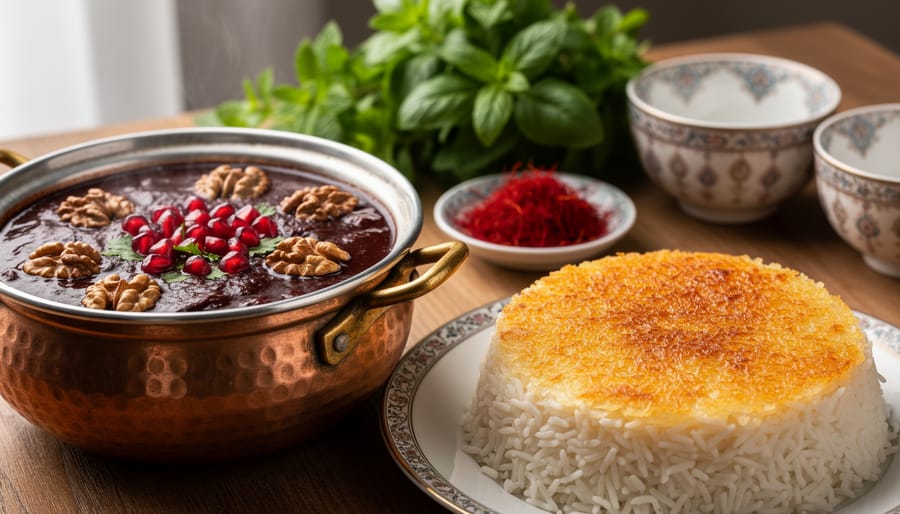
I grew up watching my grandmother transform simple ingredients into meals that told stories. A pot of fesenjan, that jewel-toned walnut and pomegranate stew, simmering for hours until the tartness mellowed into something almost transcendent. The ritual of soaking rice overnight, then steaming it to achieve that perfect golden crust everyone fought over at dinner. These weren’t just recipes. They were inheritances.
Persian cooking doesn’t shout. It persuades. Unlike cuisines that rely on heat or heavy spices, Persian food seduces through layering: the floral whisper of cardamom in a rice pilaf, the gentle pucker of barberries against buttery grains, the way a single thread of saffron can transform an entire dish from ordinary to unforgettable.
The tradition stretches back to ancient Persia, where the Silk Road brought ingredients from across empires and the royal courts of kings like Cyrus and Darius demanded dishes worthy of their grandeur. That legacy lives on today, whether you’re sitting at a family table in Tehran or discovering Persian cuisine for the first time at a restaurant halfway across the world. The foundations remain unchanged: patience, balance, and an almost reverential respect for ingredients.
The Foundation: What Makes Persian Cuisine Traditional
At its core, traditional Persian cuisine rests on a principle my grandmother called *ta’adol*, balance. This isn’t just about flavor, though the interplay of sweet and sour, the dance between tart pomegranate and honeyed dates, certainly defines many classic dishes. It runs deeper, rooted in ancient Persian medicine and philosophy. Ingredients are categorized as garm (hot) or sard (cold), not by temperature but by their effect on the body. A rich, warming stew demands cooling herbs and yogurt on the side. A cold cucumber salad pairs with grilled meat. This careful equilibrium appears in every traditional meal, reflecting a worldview where food heals and nourishes beyond simple sustenance.
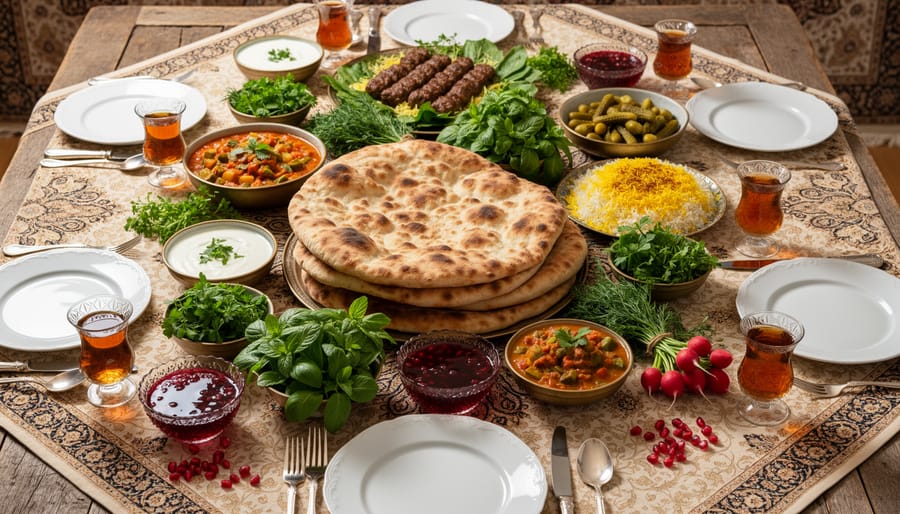
Fresh herbs distinguish Persian cooking from nearly any other tradition. Where other cuisines use herbs as garnish or accent, we use them by the handful, sometimes by the bushel. Parsley, cilantro, dill, tarragon, fenugreek, and mint appear in quantities that would shock most cooks. A proper ghormeh sabzi contains more greens than meat. Sabzi khordan, the herb platter served alongside nearly every meal, arrives at the table overflowing with basil, radishes, and scallions meant to be eaten raw, by the fistful. This abundance isn’t excess. It’s tradition, tied to Persian New Year’s rebirth symbolism and the practical wisdom that herbs aid digestion of rich foods.
Time matters in traditional Persian cooking. You cannot rush tahdig, the prized golden rice crust that forms only through patient heat. Khoresh stews simmer for hours, flavors marrying and deepening until the sauce clings to each ingredient like memory. This slow approach defies modern efficiency, but it carries meaning. Cooking becomes meditation, an offering of time that says the people you feed are worth the wait.
Perhaps most essential is the communal heart of Persian meals. Food is never just food, it’s the language of Persian hospitality the center around which family gathers, stories are shared, and bonds strengthen. Traditional Persian cuisine spreads across the table in abundance, meant for sharing from communal platters, passing dishes hand to hand. Even the word sofreh refers to the cloth spread on the floor where families once sat together, erasing hierarchy, everyone equal before the shared meal. That spirit survives, whether the table is in Tehran or Toronto.
Essential Ingredients That Define the Tradition
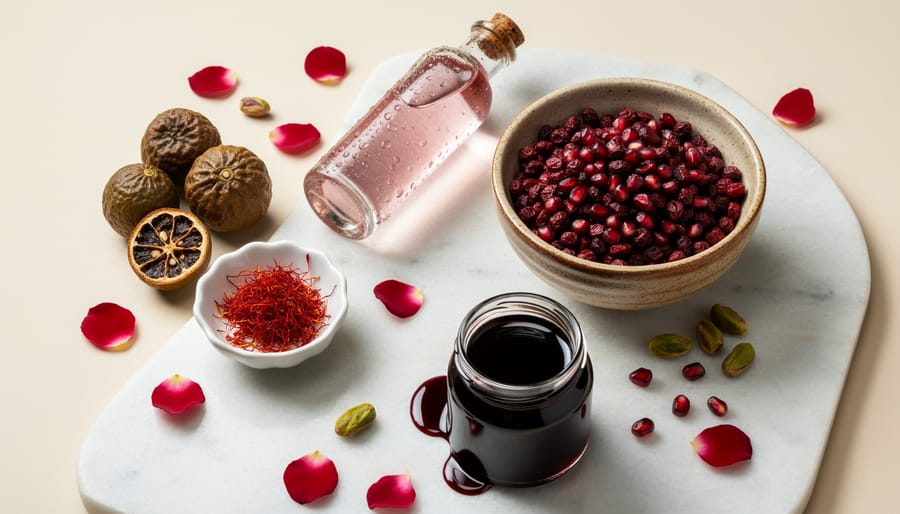
Walk into any Persian kitchen and you’ll find the same handful of ingredients that have anchored this cuisine for thousands of years. These aren’t just flavor enhancers, they’re cultural touchstones, each one carrying stories of ancient trade routes, regional climates, and the Persian philosophy of balance. My grandmother kept her saffron threads in a small tin by the stove, her dried limes in a glass jar on the counter. She’d say you could tell a cook’s heritage by which ingredients they reached for first.
- Saffron (za’feran)
- The crimson threads harvested from crocus flowers, prized for their golden color and delicate floral flavor. Used in rice dishes, stews, and desserts to add luxury and a subtle earthy sweetness.
- Dried Limes (limoo omani)
- Whole limes boiled in salt water and sun-dried until dark and intensely flavored. They provide a complex sour-bitter depth to stews and rice, unlike any fresh citrus.
- Pomegranate Molasses (rob-e anar)
- Concentrated pomegranate juice reduced to a thick, tart-sweet syrup. Essential for achieving the sweet-sour balance in dishes like fesenjan and many salad dressings.
- Barberries (zereshk)
- Tiny, jewel-red dried berries with a sharp tartness that cuts through rich flavors. Traditionally scattered over rice or mixed into polos for both taste and visual appeal.
- Rose Water (golab)
- Distilled essence of rose petals, adding floral fragrance to desserts, rice puddings, and some savory dishes. A few drops transform ordinary ingredients into something distinctly Persian.
Saffron stands as the crown jewel, so valuable that cooks bloom just a pinch in hot water before adding it to rice or stew. That golden liquid carries more than color, it represents celebration, special occasions, the care you take for guests. Dried limes might puzzle newcomers with their leathery appearance, but pierce one with a fork and drop it into a pot of ghormeh sabzi, and you’ll understand why generations have relied on their smoky, tangy complexity.
Fresh herbs occupy a category all their own in Persian cooking. We don’t sprinkle them as garnish, we use them by the bundle. Parsley, cilantro, dill, fenugreek, and chives show up in khoresh, kuku, and ash by the cupful, their bright green presence as essential as the meat or legumes. A proper ghormeh sabzi calls for pounds of herbs, not handfuls. This abundance reflects both the Persian garden tradition and a belief that herbs carry health and vitality.
These ingredients work in concert, creating the layered flavors that define traditional Persian cuisine. The saffron’s warmth balances the barberries’ tartness. The dried lime’s bitterness plays against pomegranate molasses’s sweetness. Rose water’s floral notes soften the punch of fresh herbs. Each component has earned its place through centuries of refinement, and each one remains irreplaceable in the dishes that matter most.
The Heart of the Table: Iconic Traditional Dishes
Polo: The Art of Persian Rice
Rice is the soul of every Persian meal, and in traditional Persian cooking, it’s never just boiled and served. The preparation borders on ceremony, with each grain cooked to fluffy perfection while the bottom layer transforms into tahdig, the coveted golden crust that’s crunchy, buttery, and fought over at every table. Getting tahdig right is a source of pride. My grandmother would judge a cook’s skill entirely by their tahdig, claiming you could taste patience and precision in every shattering bite.
Among signature Persian dishes the polo varieties showcase rice’s versatility. Zereshk polo layers saffron-scented rice with tart barberries and is traditionally served at weddings. Baghali polo combines rice with fresh dill and fava beans, often paired with lamb shank for Nowruz celebrations. Lubia polo features green beans and tomato-tinged rice with ground beef, comfort food at its finest.
Each polo follows the dampokhtak method: parboiling rice, then steaming it over low heat with butter and a cloth under the lid to trap steam and create tahdig. The rice must breathe, never clump. When you flip the pot to reveal an intact golden crust, there’s genuine applause. That’s not just dinner, it’s craft, tradition, and a little bit of magic passed from one generation to the next.
Khoresh: Slow-Simmered Stews
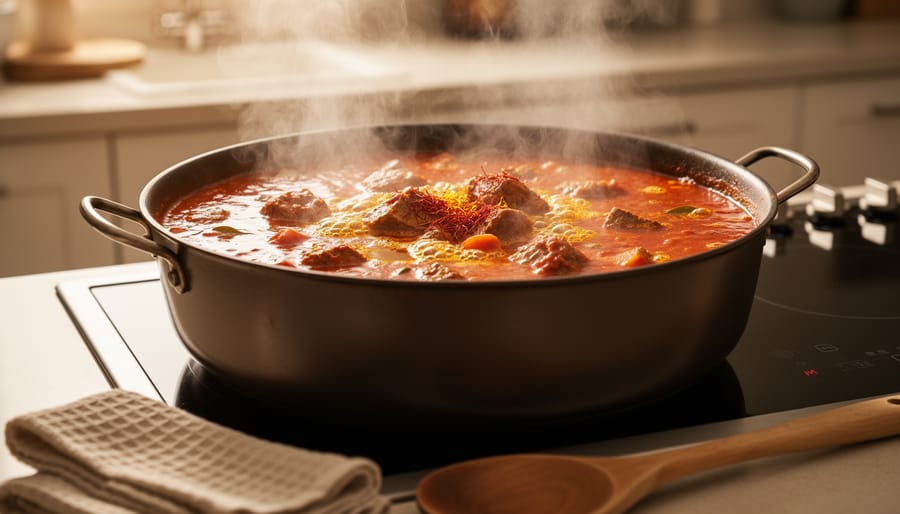
Khoresh represents the soul of Persian home cooking, stews that simmer for hours, layering flavors until they become something greater than the sum of their parts. Unlike quick-cooked dishes, khoresh demands patience. You add ingredients in stages, let them meld, adjust the balance, and wait. My grandmother used to say you could tell a good cook by their khoresh, because it revealed whether they understood the rhythm of Persian cooking.
Each khoresh tells a regional story. Ghormeh sabzi, the national dish, combines fenugreek, parsley, and cilantro with kidney beans and dried limes for an intensely herbal, tangy result. Fesenjan takes a different path, ground walnuts and pomegranate molasses create a dark, bittersweet sauce that clings to chicken or duck. Gheymeh splits yellow peas with tomatoes and dried limes, topped with crispy fried potatoes. Karafs, less known outside Persian communities, braises celery and lamb with mint and lime juice for a bright, aromatic finish.
| Khoresh | Key Ingredients | Flavor Profile | Traditional Occasions |
|---|---|---|---|
| Ghormeh Sabzi | Fenugreek, parsley, kidney beans, dried limes | Herbal, tangy, earthy | Friday family lunches, everyday meals |
| Fesenjan | Ground walnuts, pomegranate molasses | Rich, bittersweet, complex | Yalda Night, weddings, special gatherings |
| Gheymeh | Yellow split peas, dried limes, fried potatoes | Savory, tangy, comforting | Religious observances, memorial meals |
| Karafs | Celery, fresh mint, lime juice | Bright, aromatic, light | Spring meals, family dinners |
Regional variations abound. Northern cooks might add more herbs to their ghormeh sabzi, while southern versions lean heavier on fenugreek. Some families make fesenjan sweet, others prefer it tart. These differences spark friendly debates at dinner tables, each cook defending their family’s version as the authentic one. That’s the beauty of khoresh, the technique stays constant, but every pot carries its own history.
Kebabs and Grilled Traditions
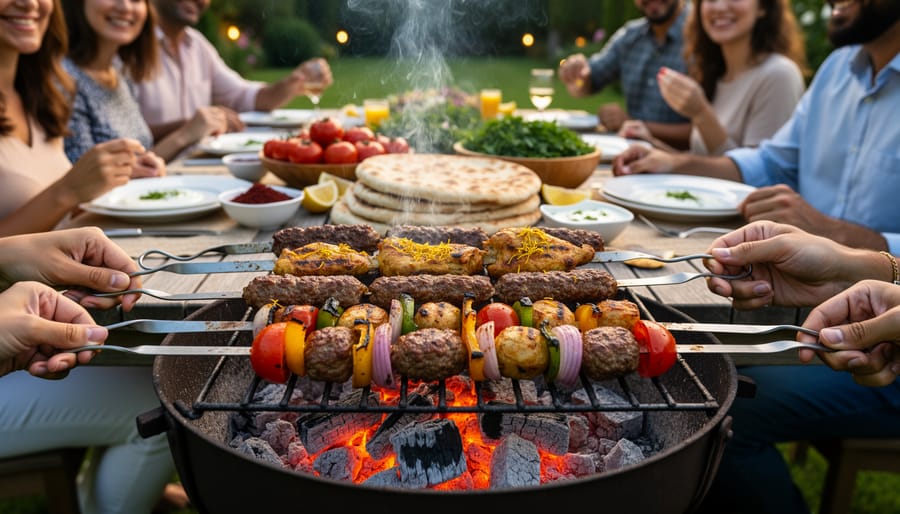
In Persian culture, grilling meat over open flames isn’t just a cooking method, it’s a ritual that brings families together, a skill passed down from father to son, and a centerpiece of celebration. The word “kebab” itself comes from Persian, and while many cuisines have adopted the technique, traditional Persian kebabs remain distinct in their simplicity and precision.
The three pillars of Persian kebab-making are koobideh, barg, and joojeh. Koobideh, made from ground lamb or beef mixed with grated onion and minimal seasoning, requires a practiced hand to mold the meat firmly onto wide, flat skewers without it falling apart over the coals. Barg, meaning “leaf,” consists of thin strips of marinated lamb or beef tenderloin, grilled quickly to achieve charred edges while staying tender inside. Joojeh kebab features chicken pieces marinated in yogurt, saffron, and lemon juice, a combination that both tenderizes the meat and gives it a golden hue.
What sets Persian grilling apart is restraint. Traditional kebabs don’t rely on heavy spice rubs or thick sauces. Instead, the quality of the meat, the heat of the charcoal, and precise timing define the result. Served alongside fluffy saffron rice, grilled tomatoes, and raw onion with sumac, kebabs represent Persian cooking at its most elemental and celebratory.
Ash, Abgoosht, and Other Ancestral Dishes
Beyond the well-known kebabs and khoresh, traditional Persian cuisine holds treasures that have nourished families for centuries. These ancestral dishes reveal the depth of Persian culinary wisdom, often requiring patience and a reverence for ingredients that modern cooking has forgotten.
Ash reshteh stands as the most beloved of Persian soups, a thick, nourishing bowl crowded with fresh herbs, beans, lentils, and reshteh noodles. The soup gets topped with kashk (fermented whey), caramelized onions, and mint oil, creating layers of tang and richness. Families traditionally serve ash reshteh before journeys or during Nowruz, believing it brings good fortune. My grandmother made it every time someone left on a trip, the fragrant steam filling the kitchen with promises of safe return.
Abgoosht, also called dizi after the stone pot it cooks in, transforms humble lamb, chickpeas, tomatoes, and potatoes into something profound through hours of simmering. You eat it in two stages: first the broth with torn bread, then the mashed meat and vegetables. It’s peasant food elevated to art.
Kuku, herb-packed frittatas, appear as Persian side dishes at nearly every gathering. Kuku sabzi, dense with parsley, cilantro, dill, and fenugreek, gets sliced into wedges and served at room temperature. Dolmeh, grape leaves stuffed with rice, split peas, herbs, and sometimes meat, require the careful hand of someone who learned young, rolling each leaf tight enough to hold but gentle enough not to tear.
Traditional Cooking Methods Passed Down Through Generations
My grandmother never measured anything. She’d stand at the stove, adjusting the flame beneath her copper pot with a practiced hand, judging doneness by scent and sound rather than timers. These techniques, refined over centuries and passed from one generation to the next, form the backbone of traditional Persian cooking. They’re methods that resist shortcuts, rewarding patience with flavors that can’t be rushed.
The dampokhtak method for cooking rice remains one of Persian cuisine’s most treasured techniques. After parboiling the rice and draining it, you return it to the pot with a bit of oil and butter, then wrap the lid in a kitchen towel before covering tightly. This creates steam that cooks the rice to fluffy perfection while forming the prized tahdig at the bottom. The towel absorbs excess moisture, preventing sogginess. My aunt could tell when the rice was ready by the gentle crackling sound, a whisper that signaled the crust had formed just right.
For khoresh, low and slow braising transforms tough cuts of meat and vegetables into silken stews. Traditional recipes call for simmering for two, sometimes three hours, allowing herbs to release their oils and flavors to meld into something greater than their parts. The heat should be so gentle that the surface barely trembles. This patience extracts depth that high heat destroys.
Grilling kebabs over open flame or hot coals remains the gold standard. The intense, direct heat sears the meat quickly, sealing in juices while creating charred edges that taste of smoke and tradition. Gas grills work, but charcoal brings that authentic flavor many Persian cooks consider essential.
Traditional copper cookware, with its superior heat distribution, still appears in serious Persian kitchens. These heavy pots maintain steady temperatures, crucial for even cooking and preventing scorched rice or burned stews.
The Role of Tradition in Modern Persian Dining
Traditional Persian cooking techniques, those copper pots, the patient layering of tahdig, the hours spent stirring fesenjan until the walnut oil surfaces, might seem at odds with modern life’s pace. Yet these methods haven’t disappeared; they’ve found new homes and adapters who understand that shortcuts erode the very soul of the food.
In Iran, home cooks still gather herbs on Friday mornings and spend weekends preparing ash reshteh the way their grandmothers did. The knowledge passes through demonstration more than recipe cards: a daughter learns the precise moment saffron should hit rice by watching her mother’s hands, not reading measurements.
Diaspora communities carry this responsibility differently. Iranian families in Canada, Europe, and beyond become living archives, teaching children the difference between proper khoresh and something merely called stew. Weekend gatherings turn into informal cooking schools where aunties debate the correct ratio of dried limes in ghormeh sabzi and uncles insist on specific charcoal for kebabs.
Persian restaurants in Toronto face a particular challenge: honoring tradition while serving customers who may never have tasted these dishes before. The best ones don’t compromise core techniques, they still make tahdig properly, still braise khoresh for hours, still hand-roll koobideh, but they explain what diners are experiencing. At Taste of Persia, that means using traditional methods in a commercial kitchen, sourcing ingredients that match what would be used in Iran, and training staff who can share the stories behind each dish.
Authenticity isn’t about freezing cuisine in amber. It’s about understanding which elements carry the tradition, the balance of flavors, the respect for ingredients, the time given to transformation, and protecting those while the context shifts.
Common Questions About Traditional Persian Cuisine
When people first encounter Persian cuisine, the same questions come up again and again. These curiosities usually stem from unfamiliarity with the ingredients, techniques, and dining customs that make this tradition unique. Here are the answers that clear up the most common misconceptions and help newcomers feel confident approaching a Persian table.
Is Persian food spicy?
Traditional Persian cuisine is not spicy in the way many associate with heat or chile peppers. Instead, it relies on aromatic spices like saffron, turmeric, and cinnamon to build complex, layered flavors that are warming rather than fiery.
What’s the difference between Persian and Middle Eastern cuisine?
While Persian food shares some ingredients with broader Middle Eastern traditions, it stands apart through its emphasis on sweet-and-sour flavor balances, the extensive use of fresh herbs, rice preparation as an art form, and slow-cooked stews that reflect centuries of refinement in the Persian Empire.
How long does it take to make traditional Persian dishes?
Many classic dishes require patience. A proper khoresh simmers for two to three hours, while achieving perfect tahdig takes about an hour of careful rice steaming. These aren’t quick weeknight meals, which is why they carry such significance when served.
What makes Persian rice special?
The preparation transforms simple grains into something nearly sacred. Rice is parboiled, drained, then steamed with butter or oil to create fluffy, separated grains topped with tahdig, the golden crust that guests fight over at every gathering.
Another question that surfaces often concerns the proper way to eat a traditional Persian meal. There’s no rigid etiquette, but the experience typically unfolds with rice taking center stage on your plate, a ladleful of khoresh spooned over one portion, and fresh herbs, yogurt, and torshi (pickles) arranged around the edges. You eat everything together, mixing the stew into the rice as you go, using the herbs and pickles to refresh your palate between bites. Bread often appears alongside rice, not instead of it, and tearing off pieces to scoop up stew or wrap around herbs is completely acceptable.
What surprises many newcomers is the pace. Persian meals aren’t rushed. Dishes arrive in waves, conversations stretch across courses, and tea follows the main meal rather than accompanying it. This rhythm reflects the communal heart of the tradition, where food serves as the backdrop for connection rather than the sole focus.
Traditional Persian cuisine endures because it does what all great food traditions do, it connects us to something larger than ourselves. These ancient recipes carry the weight of history, the warmth of family gatherings, and the careful attention of generations who understood that a meal should nourish more than just the body. When you taste the saffron-scented rice or the tangy sweetness of fesenjan, you’re experiencing flavors that have brought comfort to Persian tables for centuries.
What makes this tradition particularly special is its generosity. Persian cooking doesn’t hurry. It asks you to slow down, to share, to sit a little longer at the table. The elaborate spreads, the communal platters, the ritual of breaking bread together, these aren’t just customs. They’re invitations to connect, to belong, to be part of a story that stretches back thousands of years.
You don’t need to be Persian to appreciate this. Whether you’re experimenting with these recipes in your own kitchen or seeking out an authentic restaurant experience, traditional Persian cuisine welcomes you. The techniques take time to master, but the essence, that beautiful balance of flavors, that hospitality at the heart of every dish, translates across cultures.
If you’re in Canada and curious about experiencing these traditions firsthand, Taste of Persia honors the old ways while making them accessible to new audiences. Sometimes the best way to understand a tradition is simply to taste it.