Step into a Persian fine dining restaurant and you’ll discover something profound: this isn’t simply about eating—it’s about experiencing thousands of years of hospitality culture where every guest is treated as a cherished friend. The moment you’re seated, you enter a world where saffron-infused rice becomes edible poetry, where the gentle clink of tea glasses punctuates conversations, and where dining transforms into an unhurried celebration of life itself.
Persian fine dining distinguishes itself through an almost ritualistic attention to beauty and balance. Unlike the fast-paced service common in Western establishments, Persian restaurants embrace taraf—a cultural concept of gracious offering and receiving that shapes every interaction. Your server doesn’t just take orders; they guide you through flavor profiles developed over millennia, suggesting combinations that honor both authenticity and your personal preferences. The Persian menu becomes a map through Persian history, where each dish tells stories of ancient trade routes, royal courts, and family gatherings.
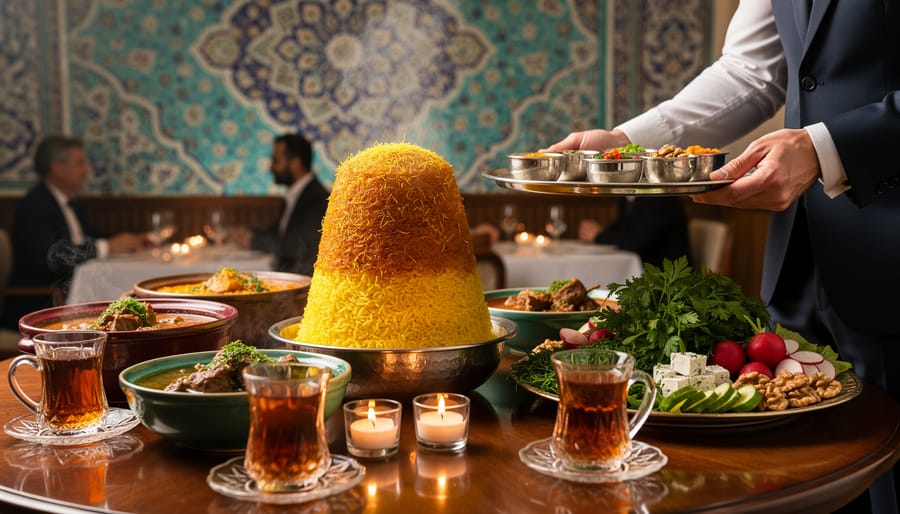
The atmosphere itself speaks volumes. Intricate tilework, flowing calligraphy, and soft lighting aren’t mere decoration—they’re extensions of Persian architectural philosophy that views beauty as essential to nourishment. You’ll notice the presentation: rice arranged in towering mounds crowned with crispy tahdig, stews adorned with jewel-toned garnishes, and herbs served so abundantly they could fill a garden.
What truly sets Persian fine dining apart is the understanding that a meal should feed more than your hunger. It should slow time, create connection, and leave you feeling not just satisfied but genuinely cared for. This is dining as it was meant to be—an art form where hospitality reigns supreme.
The Art of Persian Hospitality: More Than Just a Meal
Where Every Guest Becomes Family
In Persian culture, hospitality—or mehman-navazi—isn’t just a courtesy; it’s a sacred duty woven into the fabric of daily life. When you step into an authentic Persian fine dining establishment, you’re not merely a customer; you become a cherished guest, welcomed as though entering someone’s home.
This tradition traces back centuries, when travelers crossing vast desert routes could count on Persian homes opening their doors without hesitation. That same generous spirit lives on in today’s finest Persian restaurants. Owners often greet diners personally, inquiring about preferences and dietary needs with genuine interest. Servers become storytellers, explaining the history behind each dish or sharing memories of their grandmother’s cooking techniques.
I remember visiting a Persian restaurant where the owner insisted I try a family recipe not on the menu—his mother’s special gheymeh—simply because he noticed I was dining alone and wanted me to feel at home. He pulled up a chair, poured tea, and spent twenty minutes sharing stories about growing up in Isfahan. This wasn’t exceptional service; this was mehman-navazi in action.
At establishments committed to this philosophy, like our story demonstrates, you’ll notice staff remembering your name on return visits, adjusting spice levels to your preference without asking, and often sending complimentary treats to your table. The meal extends beyond food—it becomes about connection, warmth, and the beautiful Persian belief that a stranger is simply a friend you haven’t yet shared tea with.
The Ritual of Tea and Welcome
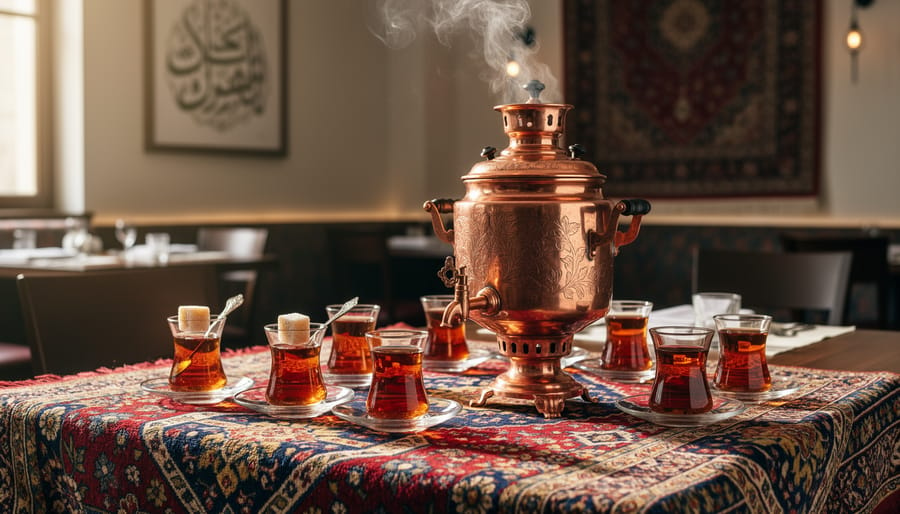
Before a single dish arrives at your table, Persian hospitality begins with a ritual that dates back centuries: the welcoming tea service. In Iranian culture, offering tea isn’t merely a beverage choice—it’s a gesture of respect, warmth, and connection between host and guest.
You’ll typically be greeted with fragrant black chai served in delicate glass cups, often accompanied by a sugar cube held between the teeth as you sip, a traditional method called shekar poshteh pahn. This moment of pause allows you to settle in, absorb the atmosphere, and transition from the outside world into the intimate space of shared dining.
The tea service sets an unhurried pace that defines the entire Persian dining experience. Unlike quick-service establishments, fine Persian restaurants embrace the philosophy that meals are meant to be savored over hours, not minutes. Your server might linger to explain menu items or share stories about particular dishes—this isn’t inefficiency, but rather an invitation into Persian culture itself.
This initial welcome ritual signals something important: you’re not just a customer here, but an honored guest entering a tradition of generosity that Persians call mehmooni, the art of hosting with heart.
Designing Spaces That Tell a Thousand-Year Story
Colors That Paint Persian Heritage
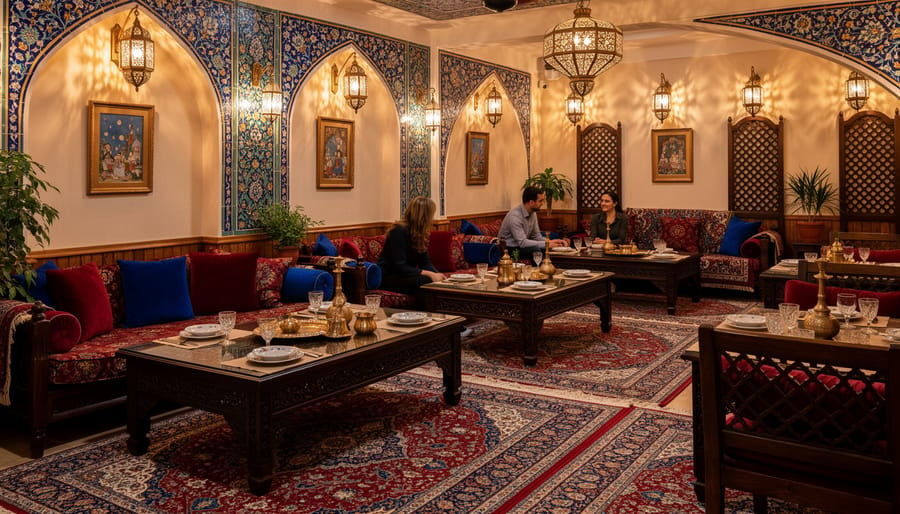
Step into a Persian fine dining restaurant and you’re immediately enveloped by colors that tell centuries-old stories. The design draws from Iran’s most treasured artistic traditions—those magnificent hand-knotted carpets, the breathtaking tilework of Isfahan’s mosques, and the serene beauty of Persian gardens that once inspired poets.
Deep cobalt blues and shimmering turquoise mirror the ornate domes and minarets of Persian architecture, creating a sense of tranquility and grandeur. These cooling hues are balanced by warm accents of gold and saffron yellow, reminiscent of precious spices and the golden light that bathes ancient courtyards at sunset. Crimson and ruby tones add richness, echoing pomegranate seeds and the intricate patterns woven into traditional textiles.
This careful color choreography isn’t merely decorative—it serves to transport diners beyond the restaurant walls. When you’re seated among these jewel tones, surrounded by the soft gleam of brass fixtures and the intricate geometric patterns adorning the walls, you’re experiencing the same aesthetic principles that have defined Persian beauty for millennia. The palette creates an atmosphere where conversation flows naturally and every course becomes part of a larger cultural narrative.
Textures and Materials From Ancient Persia
The moment you step into an authentic Persian fine dining establishment, your fingers instinctively reach out to trace the intricate patterns woven into the textiles draped across divans and walls. These hand-woven fabrics, often featuring traditional Persian motifs passed down through generations of artisans, immediately transport you to the bazaars of Isfahan or Shiraz.
Look up, and you’ll find yourself captivated by the mosaic tile work adorning archways and accent walls—each ceramic piece hand-cut and arranged in geometric patterns that have adorned Persian palaces for centuries. The interplay of cobalt blues, turquoise, and gold creates a visual feast before your meal even arrives.
Carved wooden screens, known as mashrabiya, often divide dining spaces while allowing gentle light to filter through their latticed patterns. These screens serve both practical and aesthetic purposes, offering privacy while maintaining an open, welcoming atmosphere. Copper accents catch candlelight throughout the space—from ornate serving trays to decorative vessels—adding warmth and connecting diners to Persia’s ancient metalworking traditions. Together, these elements create a tactile richness that invites you to slow down, appreciate craftsmanship, and fully immerse yourself in the dining experience.
Lighting That Captures Golden Hour in Isfahan
The lighting in Persian fine dining spaces does more than illuminate—it transports. Walking into an authentic Persian restaurant should feel like stepping into a traditional Iranian home during that magical hour when the sun bathes Isfahan’s ancient bridges in honeyed light.
Restaurant designers carefully craft this atmosphere using warm-toned fixtures, often incorporating traditional Persian lanterns with intricate metalwork that casts dancing shadows reminiscent of historic caravanserais. The goal isn’t brightness but rather a soft, enveloping glow that makes every face look beautiful and every conversation feel intimate.
I remember my grandmother’s home in Tehran, where she’d dim the lights during dinner, letting candlelight reflect off brass serving trays and creating an almost sacred atmosphere around the sofreh. Persian fine dining recreates this experience through layered lighting—perhaps a statement chandelier inspired by mirror work from Golestan Palace, complemented by table lamps or wall sconces that pool light gently across rich textiles.
This thoughtful illumination serves a purpose beyond aesthetics. It slows diners down, encouraging them to savor each course and engage deeply with companions, honoring the Persian tradition of mehmooni where hospitality and unhurried connection reign supreme.
Sensory Details That Transport You to Tehran
The Perfume of Saffron and Rosewater
Before you see a single dish, Persian fine dining announces itself through scent. The moment you step through the door, delicate wisps of saffron and rosewater transport you to ancient spice bazaars and family kitchens across Iran. These aren’t just pleasant aromas—they’re olfactory signatures that define Persian cuisine.
Saffron, the world’s most precious spice, releases its earthy, honey-like fragrance as it steeps in warm water, coloring rice a brilliant golden yellow. Meanwhile, rosewater adds a floral sweetness that might seem unusual to newcomers but feels like home to anyone who grew up with Persian cooking. I remember my grandmother explaining that these ingredients aren’t luxuries in Persian culture—they’re essentials, used as freely as salt and pepper elsewhere.
In fine dining settings, these aromas become part of the theater. Watch steam rise from a saffron-infused tahdig or catch the subtle rose notes in desserts like bastani, and you’ll understand how smell creates anticipation. For Persian diners, these fragrances trigger childhood memories. For first-timers, they signal you’re experiencing something genuinely different—a cuisine where even the air tells a story.
Music That Echoes Through Persian Gardens
The moment you step into an authentic Persian restaurant, you’ll likely hear the gentle plucking of the tar or the crystalline tones of the santur floating through the air. These aren’t just background sounds—they’re an essential ingredient in the dining experience, as carefully selected as the saffron in your rice.
Traditional Persian music transforms the atmosphere from merely elegant to truly transportive. The tar, a long-necked lute with a distinctive haunting sound, and the santur, a hammered dulcimer that produces cascading melodies, have accompanied Persian gatherings for centuries. In fine dining establishments, these classical instruments create an intimate soundscape that encourages conversation while honoring cultural heritage.
Many restaurants now blend tradition with contemporary interpretations, featuring modern Persian musicians who reimagine classical compositions with subtle jazz influences or ambient elements. The volume is kept deliberately low—just audible enough to soften sharp edges and create privacy between tables without overwhelming diners.
This musical attention to detail reflects a broader philosophy: in Persian culture, dining engages all the senses. The right music doesn’t just fill silence; it tells stories of ancient gardens, poetry readings, and gatherings where food and art were always intertwined.
Table Settings With Persian Soul
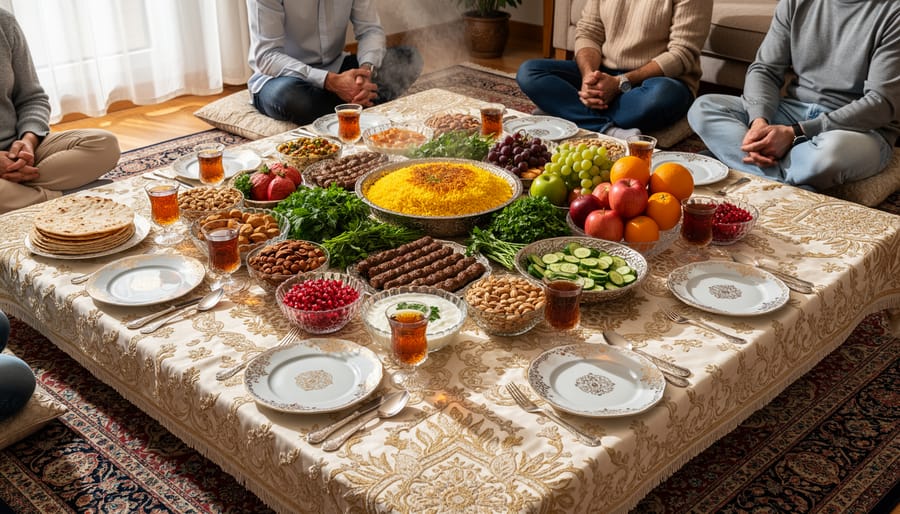
The Persian table is a canvas of artistry that transforms dining into ceremony. Traditional spreads are arranged on exquisite sofreh—ornate tablecloths often embroidered with intricate patterns—laid either on tables or, in more traditional settings, across richly carpeted floors with cushions for seating. Crystal or hand-painted ceramic serving dishes showcase each dish as a centerpiece, while brass or copper vessels add warm metallic tones that catch candlelight beautifully.
Fresh herbs arrive in dedicated herb platters called sabzi khordan, positioned centrally for easy access throughout the meal. Flatbread rests in woven baskets, still warm and aromatic. The arrangement follows an aesthetic principle of abundance and generosity, with multiple dishes presented simultaneously rather than in courses, inviting guests to compose their own perfect bites. Delicate rose water sprinklers and decorative elements like pomegranates or fresh flowers complete the tablescape, creating an immersive sensory experience that honors centuries of hospitality traditions.
The Sofreh Tradition: Dining as Cultural Experience
Step into a traditional Persian home during a celebration, and you’ll likely witness the preparation of the sofreh—an elaborate spread laid directly upon a cloth on the floor or low table. This centuries-old custom transforms dining from a simple meal into a cherished cultural ritual, one that continues to influence how modern Persian fine dining establishments create their experiences.
The word “sofreh” literally means “tablecloth,” but it represents so much more than fabric. It’s a canvas where food becomes art, and gathering becomes ceremony. Traditionally, families would sit cross-legged around the sofreh, creating an intimate circle where conversations flow as freely as the tea. This arrangement naturally encourages sharing, with dishes positioned within everyone’s reach—a physical manifestation of Persian hospitality.
Contemporary Persian fine dining restaurants have adapted this tradition beautifully for modern diners. While you might not be seated on the floor, the spirit of the sofreh lives on through presentation styles that emphasize abundance and visual harmony. Tables overflow with colorful mezze platters, vibrant herb platters called sabzi khordan, fresh flatbreads, and an array of dishes meant for communal enjoyment.
I remember my grandmother explaining that a proper sofreh should delight all the senses before the first bite. The colors should complement each other, the aromas should mingle invitingly, and the arrangement should feel generous yet balanced. Fine dining establishments honor this philosophy, often presenting multiple courses simultaneously rather than in strict sequence, creating that signature Persian tableau of plenty.
This approach extends beyond restaurant walls too. Many Persian catering services recreate this sofreh-style presentation for events, bringing the communal dining experience to celebrations and gatherings.
The sofreh tradition reminds us that Persian dining isn’t just about individual plates—it’s about creating a shared landscape where food connects us, conversations deepen, and cultural heritage comes alive with every shared dish.
When Modern Elegance Meets Ancient Tradition
Step inside a contemporary Persian restaurant, and you’ll witness something magical: the seamless fusion of centuries-old tradition with sleek, modern sophistication. It’s like walking through a portal where your grandmother’s beloved recipes meet the precision and artistry of today’s culinary innovation.
The best Persian fine dining establishments understand that authenticity doesn’t mean being frozen in time. They honor the past while embracing the present. You might find yourself seated on elegant modern furniture beneath intricate Persian calligraphy, or dining beneath minimalist pendant lights that cast shadows reminiscent of traditional latticed windows. The table settings often blend Western fine dining standards—multiple courses, wine pairings, refined plating—with distinctly Persian touches like hand-painted ceramics or rose water finger bowls.
What makes this balance so compelling is the respect shown to both elements. Chefs trained in classical French techniques apply their knowledge to showcase Persian ingredients in new ways. That centuries-old fesenjan stew might arrive as a beautifully plated duck breast with a glossy pomegranate-walnut reduction, its essence unchanged but its presentation transformed. The flavors your Persian friend’s family has perfected over generations remain intact, just presented through a contemporary lens.
The atmosphere strikes a similar balance. You’ll often hear Persian music—perhaps traditional tar and setar melodies reimagined with modern arrangements—floating through dining rooms that feel both intimate and sophisticated. Service combines the legendary Persian hospitality, where guests are treated like honored family members, with the professionalism and timing expected in fine dining.
This thoughtful integration creates something special: spaces where Iranian expatriates feel at home while newcomers discover an accessible entry point into a rich culinary heritage. It’s tradition, elevated but never compromised.
What to Expect on Your First Visit
Walking into a Persian fine dining establishment for the first time is like stepping into someone’s cherished home, where every detail has been thoughtfully arranged for your comfort. I still remember my first experience—the gentle lighting, the intricate Persian rugs, and the almost ceremonial pace that felt so different from typical Western dining.
When you arrive, expect a warm greeting that goes beyond standard restaurant pleasantries. Your host may offer you a moment to settle in before presenting the menu. Don’t rush this part. Persian dining culture values the art of gathering, and the experience unfolds in waves rather than hurried courses. Take time to absorb the ambiance—notice the Persian calligraphy on the walls, the traditional music playing softly in the background, perhaps even the scent of rosewater lingering in the air.
One insider tip: if you see sabzi khordan (fresh herb platters) arriving at nearby tables with flatbread, this is your cue that the meal has begun in earnest. These aren’t just garnishes—they’re an integral part of the dining ritual. Feel free to ask your server about unfamiliar items. Persian hospitality means your questions are welcomed, not merely tolerated.
The pacing might surprise you. Courses arrive with intentional spacing, allowing conversation to flow naturally between bites. This isn’t slow service—it’s by design. Embrace it. You’ll likely notice that rice dishes are served with particular ceremony, the golden tahdig (crispy rice) sometimes presented separately as a prized element.
One gentle reminder: Persian fine dining often involves generous portions and multiple elements on each plate. Start conservatively when filling your plate from shared platters, as there’s always more to come.
Before your visit, reserve your table in advance, especially for weekend evenings when Persian families gather for their own celebrations. This ensures you’ll receive the full attention and experience that makes Persian dining so memorable.
Persian fine dining is far more than an opportunity to savor exquisite flavors—it’s an invitation to step into a world where every element has been thoughtfully curated to honor centuries of tradition. From the moment you cross the threshold, you’re embraced by an atmosphere that speaks to the Persian soul: the interplay of intricate design and warm hospitality, the careful balance of elegance and comfort, and the unspoken promise that you’re not just a guest but honored family.
This is dining as cultural immersion, where copper vessels gleam with stories of ancient caravanserais, where aromatic saffron and rosewater transport you to bustling bazaars, and where every detail—from the hand-woven textiles to the gentle Persian melodies—works in harmony to create something transcendent. It’s an experience that reminds us that sharing a meal has always been about connection, about gathering around beauty and abundance, about celebrating the simple yet profound act of breaking bread together.
At Taste of Persia, we’ve poured our hearts into recreating this timeless tradition for you. When you visit us, you’re not simply dining out—you’re embarking on a sensory journey through Persian culture, one that nourishes both body and spirit, leaving you with memories as rich as the saffron-infused dishes we serve.